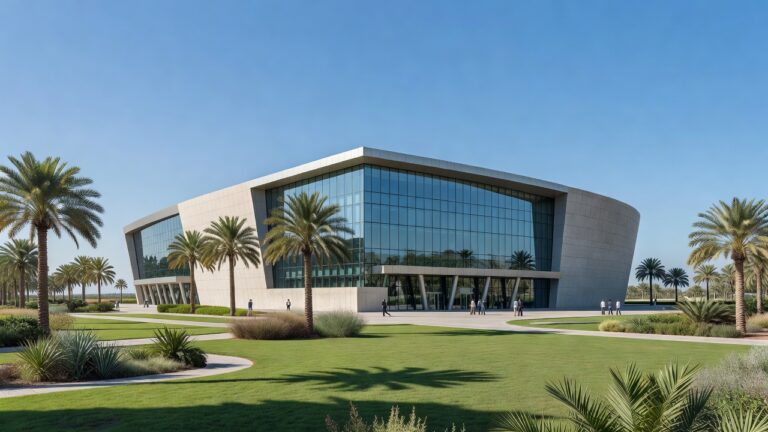



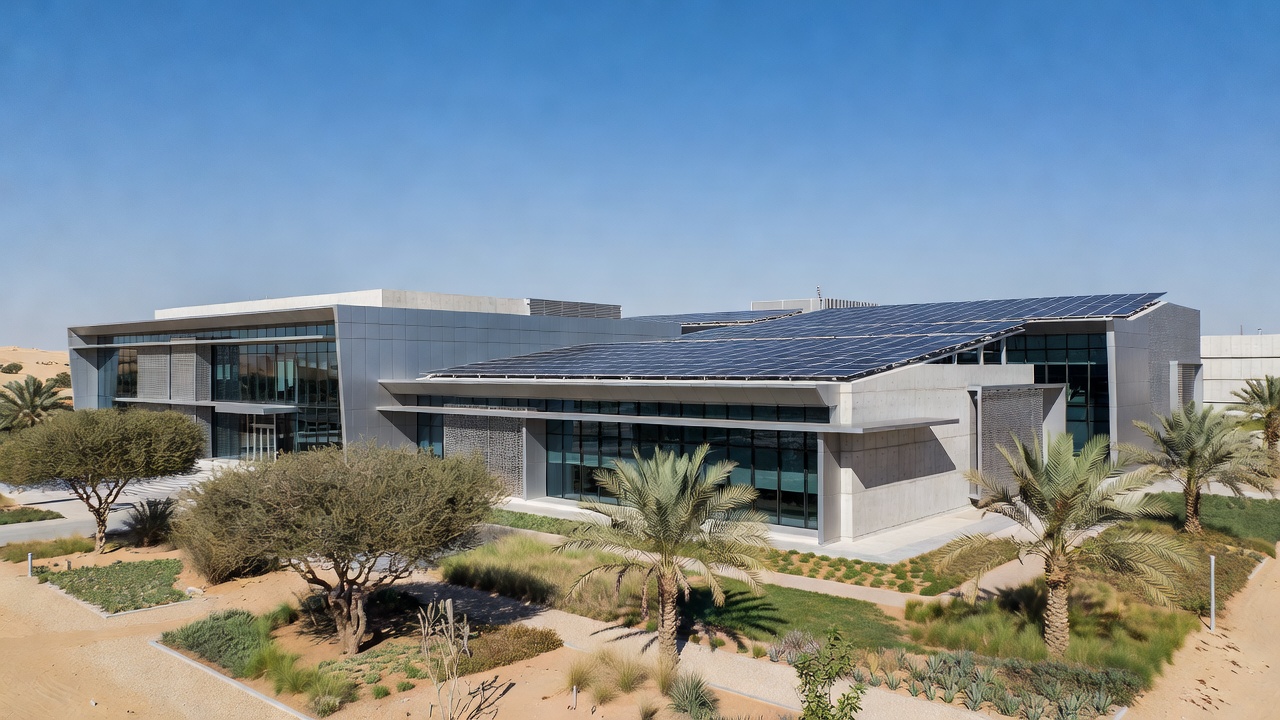

Saeed Mohammed Al Tayer managing director and chief executive of the Dubai Electricity and Water Authority reviewed pioneering projects at the DEWA Distribution Power complex in Al Ruwayyah the authority reported. The tour included an examination of sustainable building features and advanced control systems designed to enhance operational efficiency across the utility’s network. Al Tayer was accompanied by senior executives including Abdullah Obaidallah and Dr Yousef Al Akraf during the inspection that underscored DEWA’s focus on integrating artificial intelligence and automation into its water and power infrastructure.
According to DEWA the Distribution Power Division Complex has received the LEED Platinum rating from the US Green Building Council after achieving 86 points under the LEED v4 system. The complex saves nearly 30 percent of energy 51.46 percent of indoor water and 60 percent of outdoor water compared with conventional buildings DEWA figures show. It also incorporates a 663-kilowatt solar photovoltaic system on site along with 41 percent of building materials that carry an Environmental Product Declaration.
Al Tayer stated that DEWA promotes the concept of Net Zero Energy Buildings to support sustainable development strategies. The authority’s assessment found that 26 percent of the building materials have Cradle to Cradle or Health Product Declaration certificates. Rashid Bin Humaidan executive vice president of distribution power at DEWA said the complex underlines the authority’s commitment to providing a convenient environment for employee happiness.
The visit also covered the Water Control Centre equipped with a Supervisory Control and Data Acquisition system for real-time monitoring of Dubai’s water network DEWA reported. Advanced display technologies allow operators to visualise the network in global geographical and schematic views enabling rapid response to any disruptions. The centre forms part of DEWA’s broader push toward digital transformation that includes the Water Cyber Security Operational Centre and a centralised Building Management System.
DEWA data places the authority’s clean energy contribution at over 21 percent of Dubai’s energy mix with plans to increase that share to more than 36 percent by 2030 through expansions at the Mohammed bin Rashid Al Maktoum Solar Park. The solar park’s current capacity stands at 3,860 megawatts and is set to exceed 8,000 megawatts according to Al Tayer. This growth aligns with the utility’s target of 100 percent clean energy production capacity by 2050.
In the first half of 2025 DEWA commissioned four 132 kV substations with a conversion capacity of 450 megavolt-amperes at a cost of AED725 million as part of transmission projects exceeding AED7.6 billion in value the authority said. The utility is building 49 new 132 kV substations and two 400 kV substations with further tenders planned for the coming years. Hussain Lootah executive vice president of transmission power at DEWA explained that the new substations will serve various areas including citizen housing projects in Al Yalayis 5 Hatta and Warsan 4.
DEWA has also advanced its artificial intelligence applications with the launch of systems like the AI-powered gas turbine intelligent controller at the Jebel Ali complex and the upcoming Virtual Engineer set for June 2026 according to statements from Al Tayer. These initiatives build on earlier tools such as the Rammas virtual employee that has handled more than 12 million customer inquiries. The authority aims to become the world’s first AI-native utility through its Digital DEWA arm and comprehensive AI roadmap.