




The Reference and Surveillance Intelligence Department known as RASID at the Central Testing Laboratory of the Abu Dhabi Quality and Conformity Council in partnership with M42 has isolated a rare genetic clade of Candida auris from the emirate’s wastewater network according to a WAM report. A study published in Communications Medicine documented the recovery of 10 isolates from 23,212 wastewater samples collected between March 2023 and February 2024 across sites in Abu Dhabi and Al Ain. Nine isolates were identified as Clade I while one represented the newly characterised Clade VI which carried an ERG11 gene mutation linked to azole resistance the peer-reviewed paper showed. Antifungal susceptibility testing by broth microdilution revealed elevated minimum inhibitory concentrations to at least one drug in all isolates with two exhibiting resistance spanning multiple classes.
The detection constitutes the first known regional identification of Clade VI through wastewater surveillance according to the research team from the Abu Dhabi Quality and Conformity Council and M42. Whole-genome sequencing and phylogenetic analysis provided taxonomic resolution for the isolates while matrix-assisted laser desorption ionisation time-of-flight mass spectrometry confirmed their identity prior to further characterisation. The approach demonstrates how culture-based methods from environmental samples can complement hospital-based monitoring to track transmission dynamics and resistance patterns in emerging fungal pathogens the study found.
Candida auris has become a significant global health concern due to its persistence in environments and ability to cause severe infections with high mortality rates particularly in healthcare facilities. Public health authorities have prioritised surveillance of the fungus given its frequent multidrug resistance and capacity for rapid spread. The Abu Dhabi findings add to international efforts to understand the environmental reservoirs and genetic diversity of different clades of the pathogen.
RASID has analysed more than 75,000 wastewater samples from 100 monitoring sites across Abu Dhabi since becoming operational in 2022 M42 reported during its presentation at the Abu Dhabi International Hunting and Equestrian Exhibition in September 2026. The platform evaluates each sample against more than 400 biological and chemical indicators generating risk scores through artificial intelligence models that support predictive analytics. This continuous population-level monitoring allows authorities to identify potential health threats days before clinical cases emerge according to executives from the collaborating organisations.
Dr Bhuvaneshkumar Shanmugam a principal investigator senior microbiologist and laboratory director at M42 said the identification of Clade VI adds new knowledge regarding the genetic diversity of Candida auris and its presence outside clinical settings. He noted that the work helps clarify genetic relationships between isolates and variations in their antifungal resistance properties. The research received no external funding and involved collaboration between specialists from the Reference and Surveillance Intelligence Department and M42 Environmental.
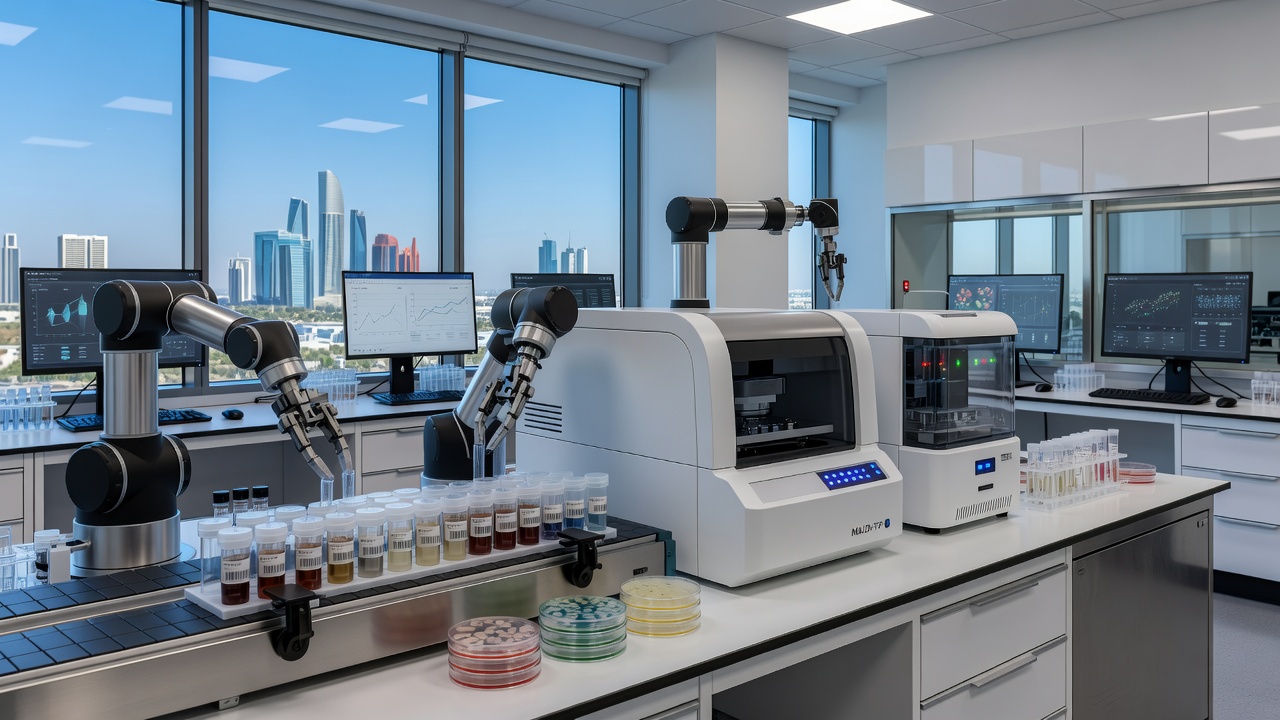
The RASID laboratory employs automated sample handling robotics advanced analytical instruments and a team of more than 40 staff to process over 100 samples daily while maintaining high operational efficiency. Its establishment reflects Abu Dhabi’s strategy to integrate genomics artificial intelligence and environmental science for proactive biosecurity and public health management. Data generated through the programme contributes to both local decision-making and the broader scientific understanding of antimicrobial resistance trends.