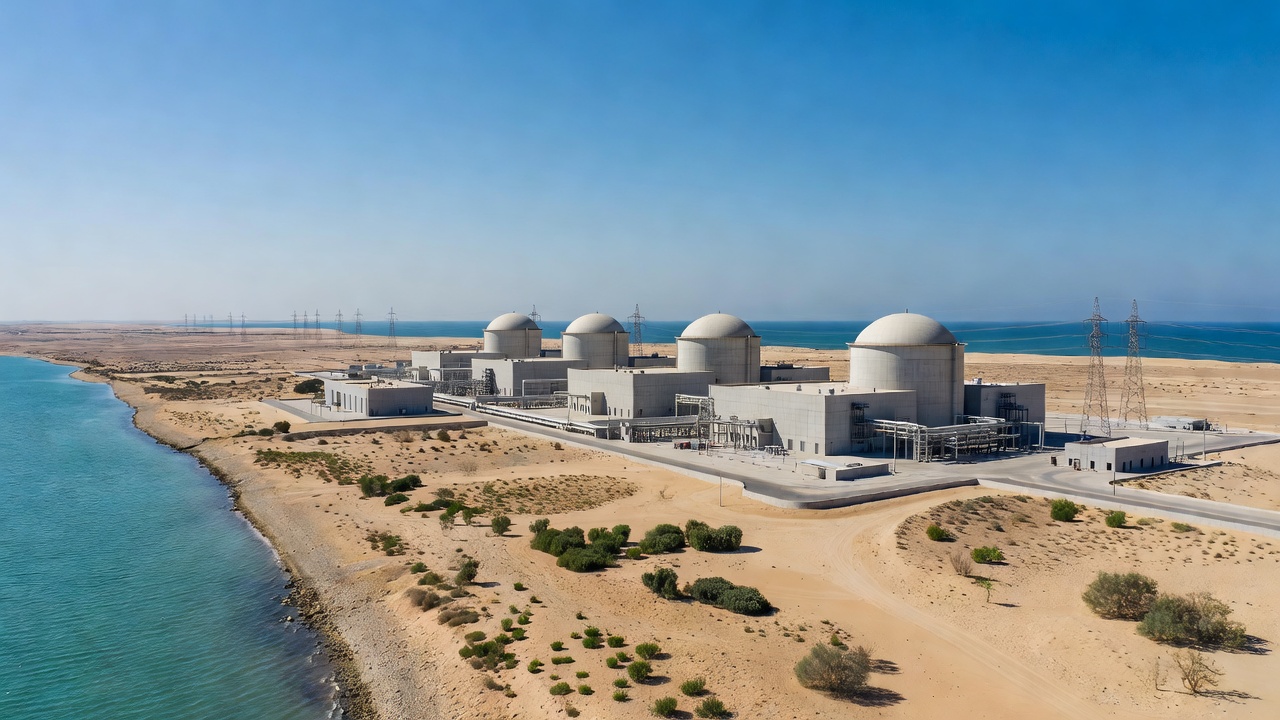

The Emirates News Agency reported that a UAE delegation attended the Roadmaps to New Nuclear 2026 Conference hosted in Paris by the OECD Nuclear Energy Agency and the United States Department of Energy. The event brought together ministers, industry leaders and experts to tackle barriers to large-scale nuclear expansion including financing, regulation and supply chains. UAE officials detailed the successful delivery of the Barakah facility as a blueprint for other countries pursuing nuclear power for the first time.
According to the International Atomic Energy Agency, the four Barakah reactors have a combined capacity exceeding 5,300 megawatts and generated more than 36,500 gigawatt-hours in 2024. This nuclear output covers approximately 22 percent of the UAE’s total electricity demand while displacing significant fossil fuel use. A Global Energy Monitor assessment placed the annual carbon savings at more than 22 million tonnes of CO2 equivalent.
Nine nuclear industry associations issued a joint statement during the conference reaffirming their dedication to safe and efficient nuclear operations worldwide, World Nuclear News reported. The signatories, which include the World Nuclear Association and the Nuclear Energy Institute, called on governments to provide the policy frameworks necessary for tripling global nuclear capacity by 2050. The UAE’s programme, launched in 2009, demonstrates how such commitments can translate into operational assets within 15 years.
Conference sessions addressed the intersection of nuclear energy with emerging technologies such as artificial intelligence data centres that require constant baseload power, an OECD Nuclear Energy Agency summary showed. Participants explored financing innovations and regulatory harmonisation to reduce project timelines and costs. The UAE delegation leveraged the platform to network with counterparts from nations considering their own nuclear initiatives.
The Barakah Nuclear Power Plant reached full operational status in 2024 with its fourth unit entering service, according to the World Nuclear Association. Construction by a South Korean consortium was completed on budget and schedule, creating a skilled local workforce now capable of supporting further regional projects. This track record has established the UAE as a reference case for safe nuclear deployment in arid environments.
Emirates Nuclear Energy Corporation data indicates the plant has produced over 120 terawatt-hours of clean electricity since its first unit started, avoiding emissions equivalent to removing millions of vehicles from roads. The UAE continues to integrate nuclear with its broader renewable energy mix that includes substantial solar capacity. International observers view the programme as a model of transparency and adherence to the highest non-proliferation standards.
By engaging in the Roadmaps to New Nuclear 2026 discussions, the UAE reinforces its role in shaping the future of global energy systems, the Emirates News Agency concluded in its coverage. The conference outcomes are expected to inform national strategies across multiple continents as demand for reliable low-carbon power intensifies.