



The Emirates News Agency reported that the anniversary underscores a sustained period of growth across multiple sectors since Sheikh Humaid bin Rashid Al Nuaimi succeeded his father on September 6, 1981. Local departments have been updated to incorporate digital technologies and linked more closely with federal counterparts over the ensuing decades. Resident satisfaction with public services and infrastructure stood at 97.1 percent in 2023, according to the Ajman Centre for Statistics.
Education emerged as an early priority with the establishment of Ajman University in 1988 as the emirate’s first private higher education institution. The university secured a 477th place in the QS World University Rankings while ranking first in the UAE for employer reputation, a QS assessment found. Such institutions have helped position Ajman as a hub for higher learning in the northern emirates.
The economy has expanded steadily with preliminary estimates placing Ajman’s gross domestic product above 36 billion dirhams in 2023, reflecting 6.25 percent growth from the prior year according to the Ajman Centre for Statistics. The Ajman Free Zone has drawn companies from multiple countries and now accounts for about 20 percent of the UAE’s industrial units, federal data shows. These gains have reinforced the emirate’s appeal to both local and international investors.
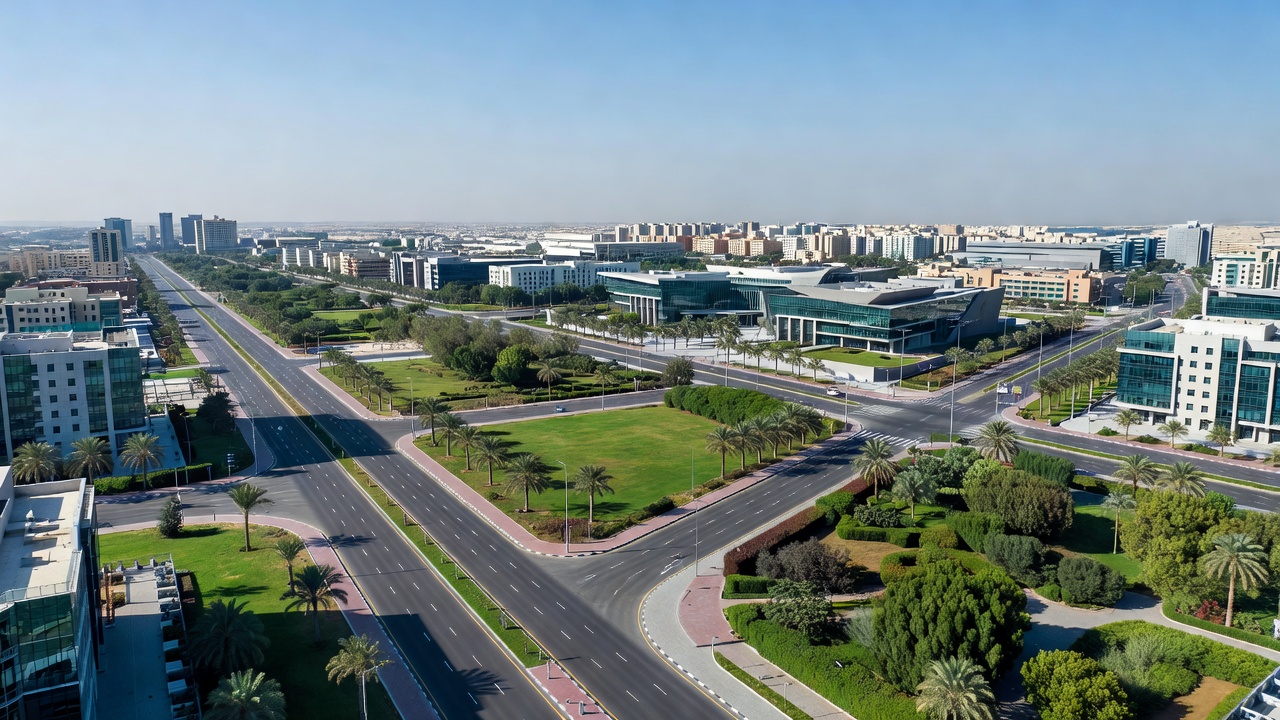
Paved roads in the emirate totaled more than 1.12 million linear meters by the middle of 2024, an increase of nearly 59,000 meters from the first half of 2023, municipal figures indicate. A Dh1.8 billion development program unveiled in July 2026 encompasses 30 projects to upgrade roads, expand cycling paths, add green spaces and improve community facilities by 2030. The Ajman Executive Council described the initiative as aligned with broader goals to manage population increases and raise living standards.
Sheikh Humaid bin Rashid Al Nuaimi participated in preliminary talks on forming the United Arab Emirates from 1968 while representing his father, one of the state’s founding figures. His subsequent rule has supported national policies that bolster the federation’s cohesion and global standing. Cultural programs launched in the early 1980s, including an annual science and culture award, have further emphasized knowledge and achievement.
Ajman Vision 2030, introduced under the patronage of Sheikh Humaid bin Rashid Al Nuaimi, sets targets for human capital development, economic diversification and enhanced liveability. The framework calls for a 400 percent rise in artistic, cultural and sports activities by 2030 while focusing on the 36 percent of residents who are young people. Policies aim to foster entrepreneurship, expand private sector involvement and promote lifelong learning across the population.