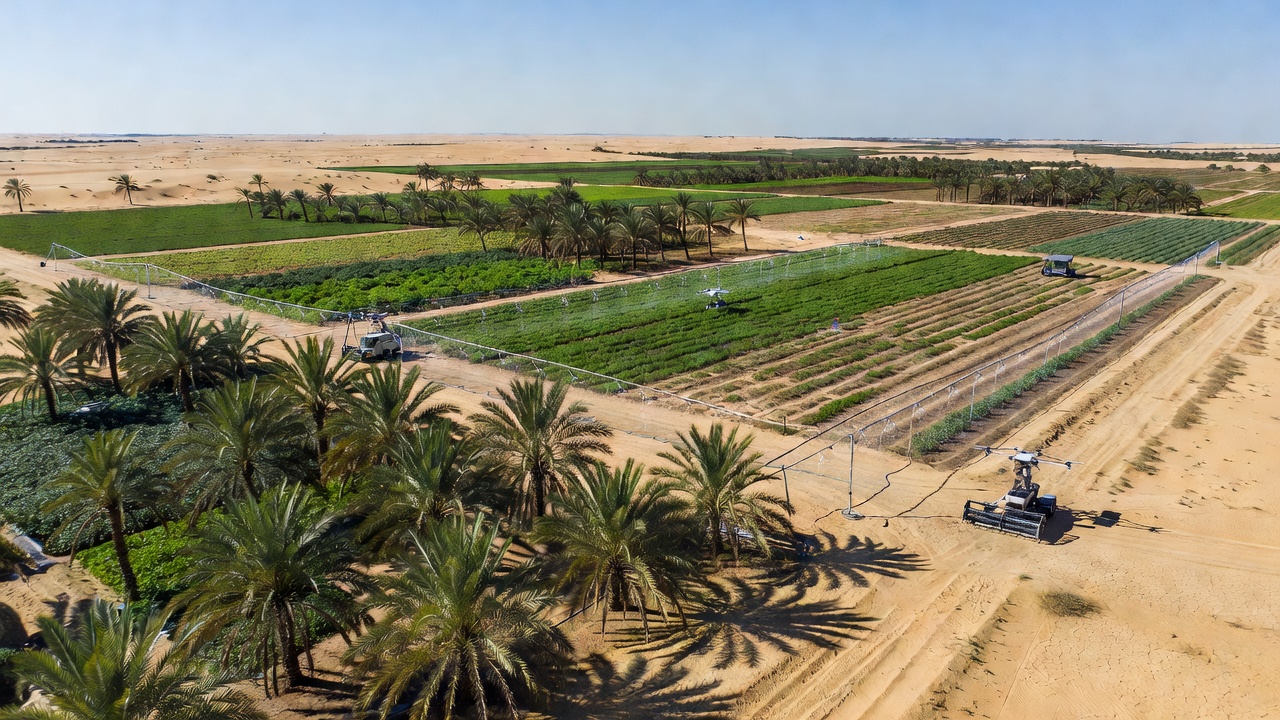

Dr. Tareq Ahmed Al Ameri, acting director-general of the Abu Dhabi Agriculture and Food Safety Authority, presented the Agricultural Transformation Strategy at a partners forum held in early October 2026, according to the Emirates News Agency. The initiative, approved by Sheikh Mansour bin Zayed Al Nahyan, seeks to establish Abu Dhabi as a global model for technology-driven and resource-efficient agriculture that can withstand future challenges. Al Ameri emphasised the strategy’s foundation in the principle of growing more with less to bolster both economic and environmental sustainability across the food value chain.
The authority’s assessment sets clear 2040 objectives that include elevating Abu Dhabi’s position in the Global Food Security Index to fifth worldwide from its current standing, ADAFSA figures show. Agricultural contribution to gross domestic product would rise from AED9.5 billion to AED34.6 billion, representing a 264 percent increase, while self-sufficiency in essential food products would climb from 30 percent to 70 percent. Irrigation water use per hectare would fall by 49 percent, from 24,700 cubic metres to 12,700 cubic metres, with advanced technologies deployed on 70 percent of farms and capital access extended to 75 percent of operations.
Five core pillars support the framework, beginning with self-sufficiency and productivity that expands local output to meet domestic needs, according to an ADAFSA statement. Resource efficiency, resilience, safety and security, technology enablement, and financial enablement complete the structure, each addressing distinct aspects of the agricultural sector from production through to consumption. The authority has rolled out 13 flagship programmes spanning infrastructure, inputs, manufacturing, logistics, trade and consumer engagement to translate these pillars into tangible outcomes.
Implementation focuses on the entire agricultural value chain to drive long-term viability, ADAFSA reported at the Global Food Security Summit held in conjunction with World Food Week. The approach integrates innovation, data analytics and artificial intelligence to empower farmers, livestock breeders and producers while enhancing the competitiveness of local goods on both domestic and international markets. Supporting initiatives include the recently launched corporate identity that visually reinforces themes of protection, resilience and integrated food safety from farm to consumer.
Abu Dhabi’s food production sector reached AED13.3 billion in 2023 and accounted for 36 percent of the UAE’s total food manufacturing output, prior ADAFSA data indicated. The strategy builds on this base by promoting value-added processing of dates, dairy, meats and other products alongside waste reduction efforts that convert surplus into secondary goods such as jams, fertilisers and bioenergy. Research and development components, including genome projects and good agricultural practices certification, further aim to lift productivity thirtyfold in some applications while cutting water consumption by up to 60 percent.
The authority continues to track progress through an annual agricultural sustainability index aligned with United Nations Food and Agriculture Organization methodology, according to ADAFSA documentation. More than 1,500 farms have already secured certification under related good practices programmes, providing a foundation for broader adoption across the emirate. These measures collectively position the strategy as a comprehensive response to climate pressures, population growth and supply chain vulnerabilities affecting regional food systems.