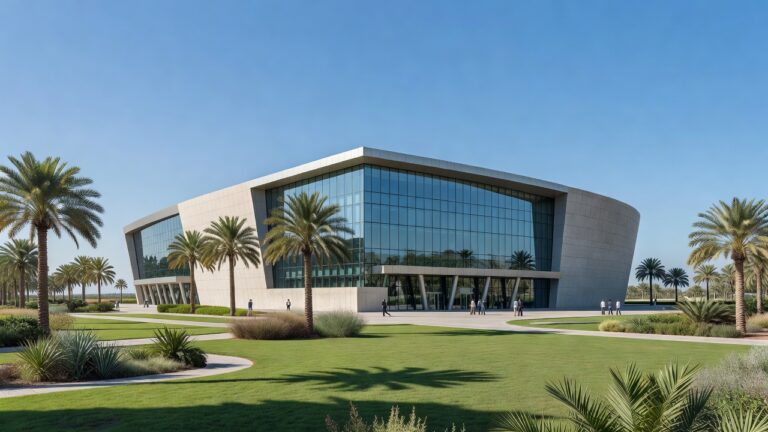





The Abu Dhabi Arabic Language Centre, part of the Department of Culture and Tourism – Abu Dhabi, has completed the 475-page document after nearly two years of work involving more than 25 researchers. According to the centre, the report examines prominent characteristics and key challenges in Arabic language curricula across the five Arab countries and offers a suggested frame of reference for designing a new generation of curricula that align with learner and teacher needs. The ALC stated that the study forms part of ongoing efforts to position Arabic as a language of knowledge and cultural identity.
A dedicated section of the report reviews international models from Australia, China, the United States, Singapore, South Africa and Ireland, according to the ALC. The centre noted that these examples illustrate efforts to develop native-language curricula guided by scientific research and community requirements. Such comparative analysis aims to provide decision-makers with practical insights for curriculum reform.
The document is structured in eight chapters, the ALC reported. An opening chapter defines the concept of curriculum, traces its historical development across various educational schools and presents an evaluation framework. Subsequent chapters analyse the curricula of each of the five Arab states, exploring prospects, opportunities and obstacles before a concluding section summarises key results and outlines a vision for updated reference standards.
Dr. Ali bin Tamim, chairman of the ALC, said, “This report is the result of two years of hard work devoted to the field of education, which is a top priority for us in our plans to empower the Arabic language and position it as a language of knowledge and a marker of our cultural identity.” He added that the report’s recommendations will support officials and decision-makers in developing academic curricula to teach the Arabic language and help build a frame of reference for designing new curricula that meet the needs of the educational sector.
Saeed Hamdan Al Tunaiji, executive director of the ALC, said, “Mastering the Arabic language is a scientific and cultural necessity for Arab students.” Al Tunaiji noted that the process of developing Arabic language curricula is a key educational and scientific requirement that requires advanced expertise in order to adapt to contemporary requirements. He expressed hope that the report will contribute to efforts to develop Arabic language curricula in a way that fulfils these needs and meets all aspirations.
The publication represents the first in a planned series of projects, books and studies covering multiple aspects of Arabic language teaching, including assessment methods and the use of technology, the ALC indicated. The centre will carry out the research series in collaboration with academic partners across the UAE. A separate global study released by the Qatar Foundation International and the Institute of International Education in June 2026 highlighted sustained growth in Arabic enrolment across six countries including Canada, Ireland and Italy.