


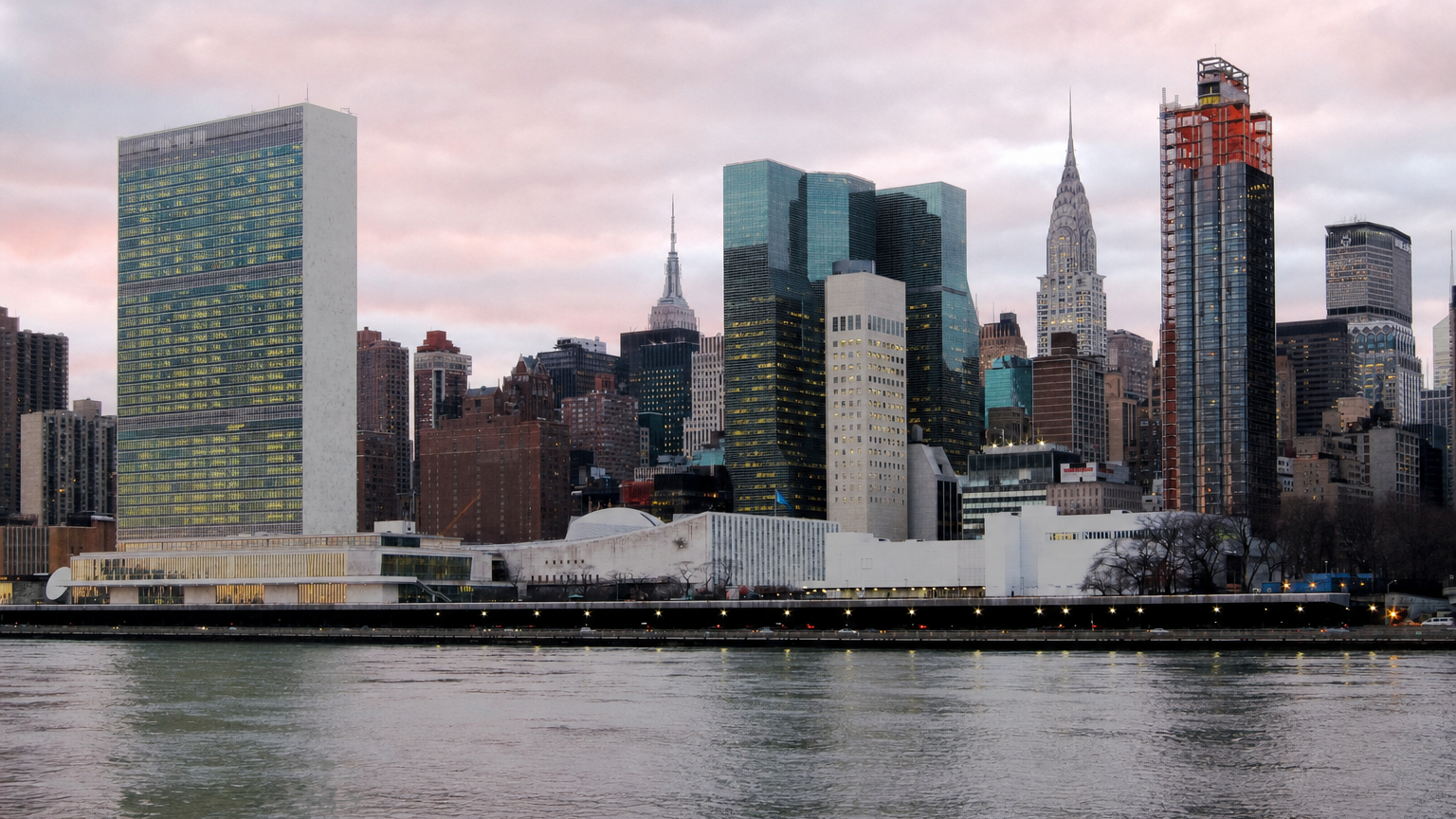

Future Health, a global initiative by Abu Dhabi, announced it hosted a high-level roundtable in New York on the sidelines of the 81st session of the United Nations General Assembly. The meeting was chaired by Ahmed Al Sayegh, minister of health and prevention of the United Arab Emirates. Senior government representatives and health leaders from Angola, Brazil, Ethiopia, Finland, Guyana, Indonesia, Madagascar, Mali, Nigeria, Rwanda, Sweden, the United Kingdom, Tanzania and the United States took part, according to the initiative’s statement issued through Business Wire. The gathering sought to translate scientific advances into scalable delivery models that move health systems beyond pilot programs.
The dialogue operated under the theme of redesigning health systems for prediction, prevention and population health outcomes. Four linked requirements surfaced consistently across the varied national settings represented at the table. Population data systems capable of spotting risks sooner formed the first priority, followed by financing structures and incentives that reward prevention. Delivery capacity to convert those insights into timely services and trusted, inclusive mechanisms that reach people in their daily environments completed the list, the statement indicated. Participants examined how these elements could be adapted to local contexts while maintaining coherence at scale.
Prevention cannot be separated from the environments where people live and work, nor from community infrastructure that supports both everyday health measures and outbreak response, a Future Health assessment found. The roundtable stressed the importance of building public confidence through inclusive design. Such approaches aim to ensure that advances in science benefit entire populations rather than remaining confined to limited demonstrations, according to those involved in the discussion.
World Health Organization figures show more than 43 million lives are lost each year to non-communicable diseases, a burden that underscores the value of shifting toward earlier intervention. Separate WHO-hosted sessions in recent years have highlighted that climate-related health emergencies are growing in scale and frequency, with mitigation efforts potentially delivering substantial returns. A 2024 WHO roundtable, for instance, noted that every dollar spent on climate action for health could generate over four dollars in benefits while saving millions of lives annually, data that aligns with the preventive focus pursued in the Future Health gathering.
Al Sayegh guided the conversation toward concrete priorities that could be acted upon by participating governments. The UAE minister’s role reflects Abu Dhabi’s broader commitment to positioning health innovation as a global public good, the initiative’s release stated. Representatives from participating nations shared experiences that illustrated both common challenges and distinct pathways for embedding prediction and prevention into existing structures.
The event forms part of wider health-focused activity during the UN General Assembly session, which has also featured discussions on universal health coverage and pandemic preparedness. Public health experts have repeatedly called for better alignment between global commitments and domestic delivery systems. Future Health positioned its roundtable as a contribution to that alignment by concentrating on the operational requirements for turning policy goals into measurable population health improvements.
Ministries represented at the roundtable are expected to carry forward the identified priorities within their national planning processes. The initiative will continue to facilitate follow-up exchanges among the participating countries. This sustained engagement aims to support the transition from discussion to implementation across diverse health system architectures.