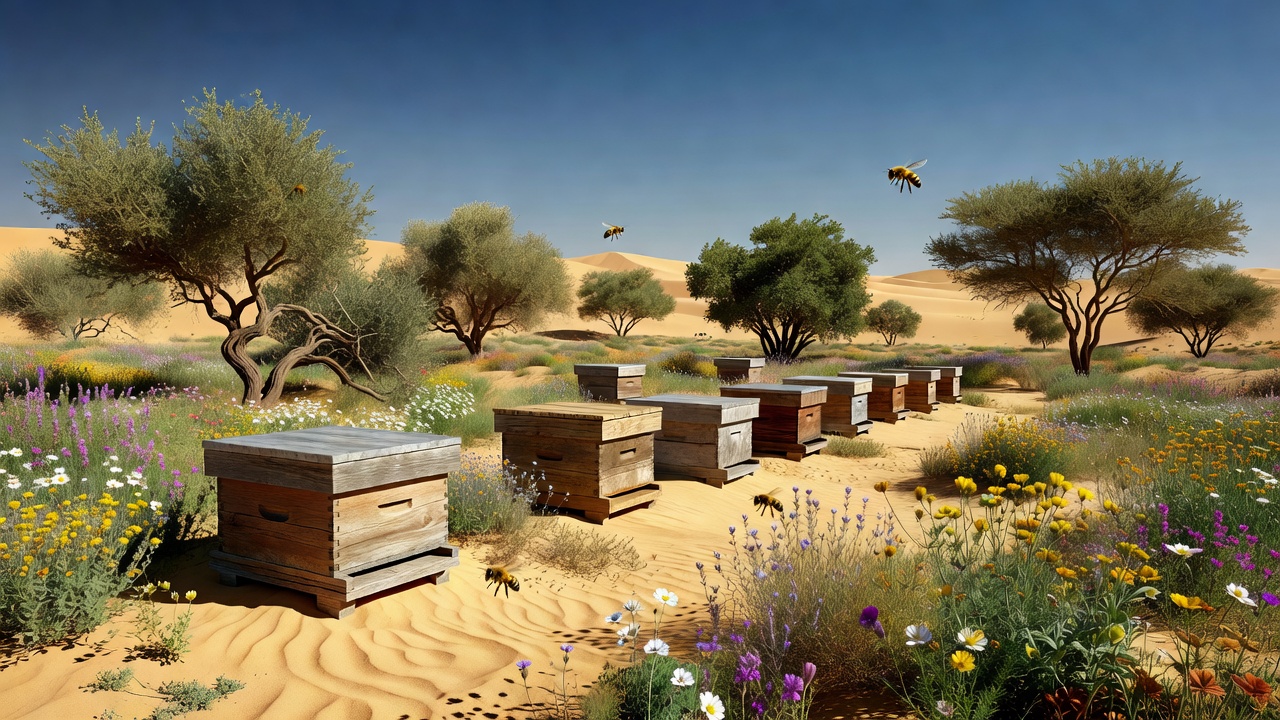

The Abu Dhabi Agriculture and Food Safety Authority is organising the Abu Dhabi Honey Symposium in collaboration with Apimondia and ADNEC Group a Modon company as part of Global Food Week 2026. The gathering described by organisers as the largest scientific assembly dedicated to beekeeping and honey production in the Middle East and North Africa will offer the first regional platform for experts researchers policymakers and private sector representatives to explore the sector’s future in arid settings. The event falls under the patronage of His Highness Sheikh Mansour bin Zayed Al Nahyan Vice President Deputy Prime Minister Chairman of the Presidential Court and Chairman of the ADAFSA board of directors. Organisers stated that the symposium will address challenges and opportunities for sustainable apiculture across the region.
According to a statement from the authority the three-day symposium will open on October 6 with an official ceremony and continue through October 8 at the ADNEC Centre in Abu Dhabi. The programme will feature keynote lectures delivered by international experts from Apimondia as well as a high-level panel that reviews the UAE’s leadership in constructing a sustainable beekeeping and honey sector. The event theme focuses on innovative solutions and technologies for climate change adaptation in beekeeping practices. This symposium forms one element of the wider Global Food Week which introduces a new business-to-consumer platform for direct producer-consumer interaction.
Global Food Week 2026 expands on the prior year’s edition which according to organisers included more than 2,000 exhibitors and brands from 75 countries attracted over 40,000 visitors and produced business agreements worth AED6.6 billion. The 2026 programme encompasses eight specialised sectors spanning the food and beverage value chain with a prominent honey sector that unites leading beekeepers and producers alongside the 12th edition of the Abu Dhabi Date Palm Exhibition. A dedicated honey pavilion will enable local producers to display regional varieties share production methods and engage with buyers pursuing authentic high-quality items rooted in heritage. The new B2C platform aims to support SMEs and local producers in testing innovations directly with consumers.
ADAFSA data published in May 2026 shows that the authority began production of the 11th generation of Emirati queen bees to strengthen the domestic beekeeping sector and decrease dependence on imported colonies. The programme had yielded approximately 25,000 queen bees over 10 generations from 2015 to 2025 of which around 19,000 were distributed to 613 beekeepers throughout the UAE. Production for the current generation reached about 1,500 queens by May with 850 distributed to 23 beekeepers and the full 2026 target set at 5,300 to improve local honey output and quality. The authority continues to rear additional queens during the autumn season to meet the annual goal.
The authority reported success at the Paris International Honey Awards 2026 where Emirati entries earned a gold award for Sidr honey a gold award for Samar honey in the liquid category and a silver award for crystallised Ghaf honey. These results align with ADAFSA initiatives to promote premium local honey types associated with UAE environments such as Samar Sidr Ghaf mangrove Harmal and wildflower varieties. The symposium will facilitate exchanges on technologies best practices and strategies to advance pollination services and regional food security.
The broader Global Food Week will also stage the second edition of the Global Food Security Summit that brings together senior government officials policymakers researchers and food industry leaders. Discussions at the summit will stress the value of joint efforts to develop resilient sustainable and forward-looking food systems. Additional activities include business matchmaking sessions innovation displays and specialised exhibitions covering multiple segments of the agriculture and food value chain.