



The UAE sent a high-level delegation to the Third BRICS Transport Ministers’ Meeting hosted by India, according to the Emirates News Agency. The gathering brought together transport officials from Brazil, Russia, India, China, South Africa and newer members including the UAE to discuss strategies for improving global logistics networks. Delegates reviewed progress on previous commitments and explored new frameworks for collaboration in areas such as green mobility and digital integration in transport systems. The meeting occurred amid expanding BRICS influence, with the group now accounting for more than 45 percent of the world’s population and a growing share of global GDP according to International Monetary Fund assessments.
UAE Minister of Energy and Infrastructure Suhail Mohammed Faraj Al Mazrouei led the national team and presented the country’s experience in developing advanced transport infrastructure, the Emirates News Agency reported. Al Mazrouei emphasised the importance of harmonising regulations across BRICS nations to facilitate smoother cross-border movement of goods and passengers. He highlighted ongoing UAE projects that integrate rail, sea and air transport as models for regional cooperation. The minister also noted that BRICS members could benefit from shared technologies in electric vehicles and smart port management.
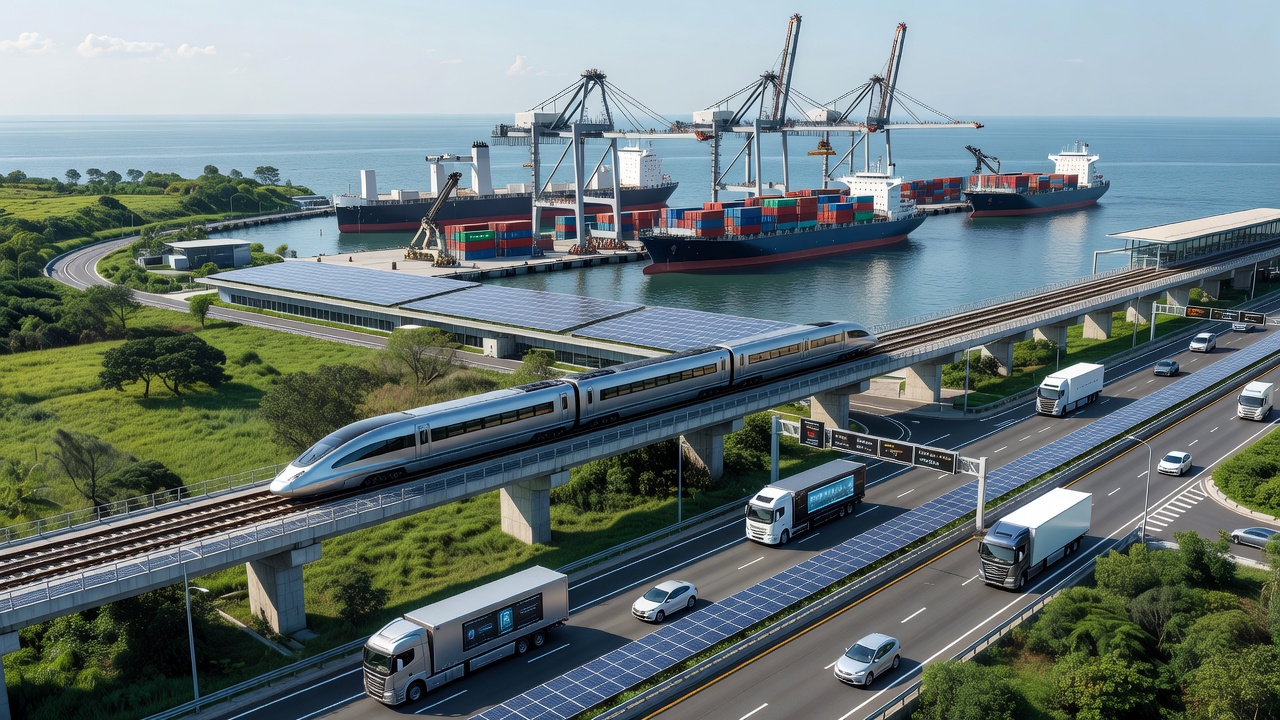
Discussions at the meeting covered sustainable transport solutions, including low-emission shipping and high-speed rail connectivity, according to a summary issued by the Indian Ministry of Road Transport and Highways. Participants agreed to establish a working group that will meet quarterly to track implementation of joint initiatives. The UAE delegation advocated for greater private sector involvement in BRICS transport projects to accelerate innovation and financing. Outcomes included a commitment to align standards on autonomous vehicles and green fuels by the end of 2027.
BRICS transport cooperation has gained momentum since the group’s expansion in 2024, with the UAE’s accession opening new avenues for Gulf-Asia trade routes, World Bank trade data shows. Bilateral trade between the UAE and other BRICS countries exceeded $180 billion in 2025, a figure that has more than doubled since 2020 according to Central Bank of the UAE statistics. The transport sector plays a pivotal role in this growth, supporting diversified supply chains that reduce reliance on traditional maritime corridors. Al Mazrouei told meeting participants that targeted infrastructure investment could cut logistics costs by up to 15 percent across member states.
The Third BRICS Transport Ministers’ Meeting built on two prior gatherings that established baseline principles for digital customs clearance and joint safety protocols, the Emirates News Agency stated. India, as this year’s chair, presented a detailed roadmap for integrating new members into existing BRICS transport mechanisms. The UAE’s participation reflects its broader foreign policy of engaging multilateral platforms to advance economic objectives. Future meetings are scheduled to rotate among member capitals, with the next session planned for Russia in 2027.
UAE officials used the platform to showcase domestic achievements, including the completion of major rail segments under the Etihad Rail network that now connects key industrial zones to ports, according to the Ministry of Energy and Infrastructure. The delegation shared data on the country’s port throughput, which reached record levels in 2025 with more than 25 million TEUs handled at Jebel Ali alone per Dubai Ports World figures. These accomplishments position the UAE as a potential hub for BRICS-related logistics activities in the Middle East. Ministers from other countries expressed interest in studying the UAE model for public-private partnerships in transport infrastructure.