



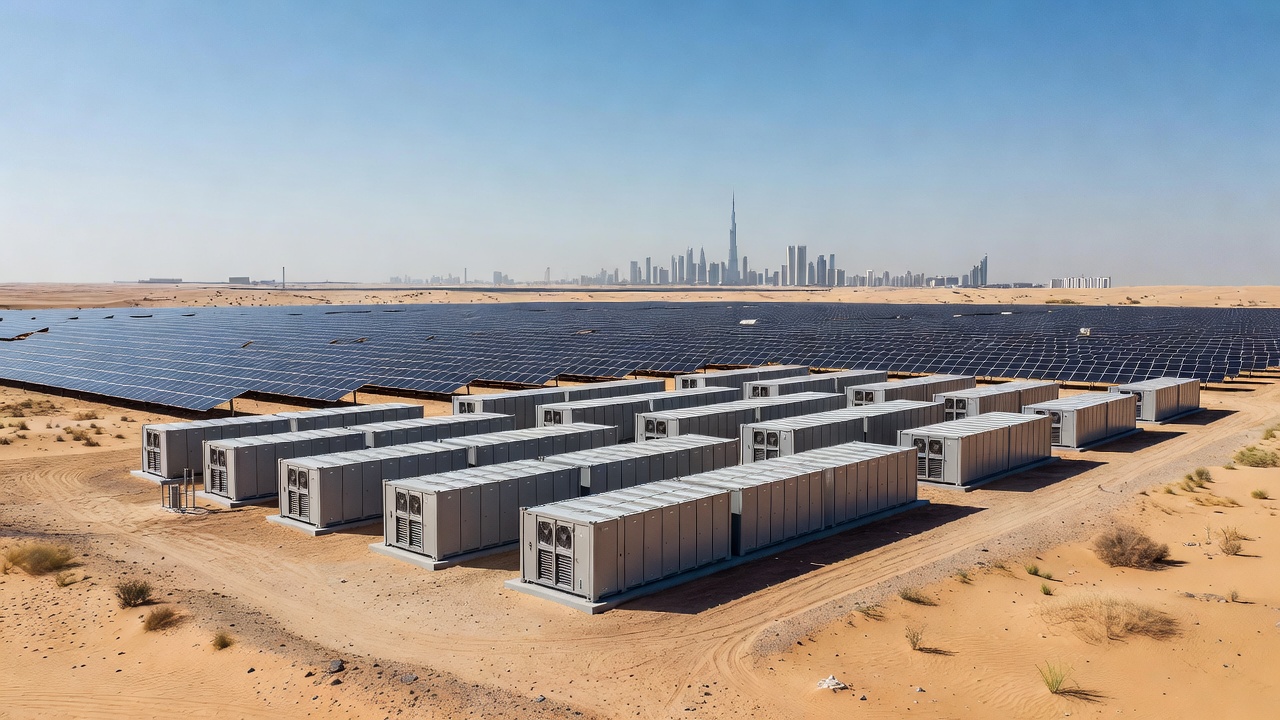

Trina Storage has set out its expectations for substantial growth in the UAE energy storage market. The company anticipates the sector will reach a value of $3.25 billion by 2030 according to a report from the Emirates News Agency. Grand View Research data places the 2024 market at $429.5 million with expansion forecast at a compound annual growth rate of 41.2 percent through the end of the decade. This outlook reflects rising requirements for systems that balance intermittent renewable generation with consistent power supply.
Data centers formed the largest application segment in 2024 while industrial users represent the fastest-growing category Grand View Research figures show. The UAE’s National Energy Strategy 2050 calls for a significant increase in clean energy capacity that necessitates reliable storage solutions to maintain grid stability. Wood Mackenzie analysis indicates the wider Middle East storage market will expand tenfold to 34 gigawatts and 132 gigawatt-hours by 2035 with the UAE contributing through major utility tenders. Hybrid configurations dominate UAE deployments in contrast to standalone systems more common in neighboring markets.
Masdar has started construction on a combined solar and storage project in Abu Dhabi that pairs 5.2 gigawatts of photovoltaic capacity with a 19 gigawatt-hour battery system. The development scheduled for completion in 2027 will deliver 1 gigawatt of baseload power around the clock according to the developer. CATL will supply the battery equipment for the installation which forms part of broader efforts to overcome solar intermittency at competitive tariffs. Such utility-scale initiatives anchor the current pipeline of storage deployments.
Government funding and regulatory frameworks have supported the deployment of advanced storage technologies across the emirates. Allocations exceeding $160 billion for renewable projects have heightened the need for systems capable of managing supply fluctuations and providing ancillary services. The Emirates Water and Electricity Company and Dubai Electricity and Water Authority have incorporated storage into multiple tender rounds to align with national sustainability targets. These programs have drawn participation from both international technology providers and regional developers.
Trina Storage’s assessment underscores opportunities in utility-scale as well as behind-the-meter applications for commercial and industrial consumers. Lithium-ion systems continue to lead deployments while interest grows in alternative technologies for extended duration requirements. Declining battery costs combined with policy incentives are expected to maintain the expansion pace through 2030 according to multiple industry assessments. The market’s trajectory aligns with the UAE’s net-zero emissions objective set for 2050.