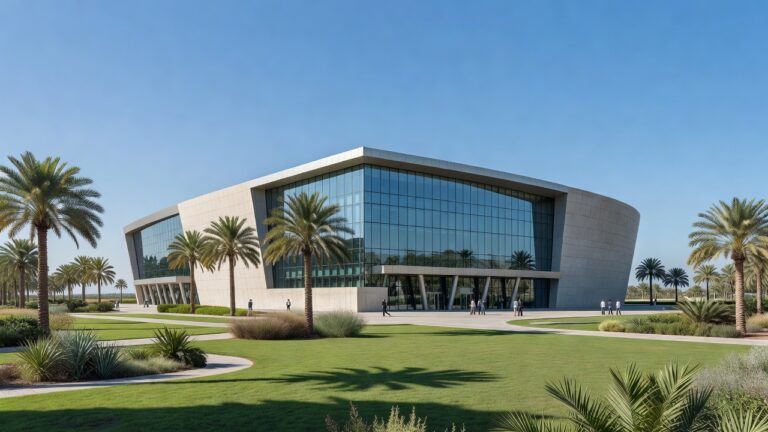

The American University of Sharjah announced the establishment of the UNESCO Chair following the signing of an agreement with the United Nations Educational, Scientific and Cultural Organisation. Sheikha Bodour bint Sultan Al Qasimi, who serves as president and chairperson of the AUS board of trustees, lent her patronage to the initiative that will operate from the university’s Center for Arab Studies and Islamic Civilizations. Dr. Mai Zaki has been appointed as the UNESCO co-chair holder, tasked with steering efforts that combine traditional Arabic scholarship and advanced digital methods.
A UNESCO overview places the global total of such chairs and related networks at roughly 950 across 120 countries, with this new position distinguished as the only one focused on the convergence of Arabic language studies, artificial intelligence and digital heritage preservation. The chair’s stated objectives include collecting, digitising and curating artefacts along with endangered Arabic dialects through innovative digital tools and multilingual metadata standards, according to the university announcement. It will further advance interdisciplinary research that integrates AI, machine learning and digital humanities to generate scholarly publications, open-access resources and fresh perspectives on contemporary issues in Arab societies.
Irakli Khodeli, associated with UNESCO’s Prince Sultan bin Abdulaziz Al Saud Programme for the Arabic Language, said, “With the unprecedented speed and scale of advancement and use of AI, especially Large Language Models, language is playing a critical role in the way technology is transforming societies. We must ensure that the Arabic language, used daily by more than 500 million people, is fully contributing to and benefiting from these transformations. This is the aim of UNESCO and its Prince Sultan bin Abdulaziz Al Saud Programme for the Arabic Language, and we are delighted to join forces with the newly launched UNESCO Chair in Arabic Language, AI and Digital Heritage to reinforce the role of Arabic.”
The development aligns with prior AUS partnerships, including a 2025 memorandum of understanding with Morocco’s Al Akhawayn University that targets joint work in digital humanities, ethical AI and the creation of open-source Arabic datasets drawn from literary works, media and academic publications. A separate UAE-based project produced the Jais large language model, trained on a 395-billion-token Arabic and English corpus, illustrating the growing technical foundation for culturally attuned AI applications in the region, according to university research summaries. Research published in academic journals on AI’s role in Arabic linguistic heritage has called for unified open-source databases to safeguard classical texts, manuscripts and historical dictionaries against digital obsolescence.
UNESCO’s own digitization programmes, which have received substantial support from Sharjah authorities for the period through 2029, seek to address the fact that around 60 percent of the organisation’s archival holdings still require preservation treatment. The new chair will promote cross-regional collaboration via digital projects involving partners throughout the Arab States, Africa, Asia-Pacific and the broader UNESCO UNITWIN framework, the university said. Community outreach forms another pillar, directed at building capacity among early-career scholars and expanding public access to curated cultural materials.
The American University of Sharjah described the chair as a vehicle for producing meaningful research, accessible digital resources and regional expertise that can serve communities across the Arab world and beyond. Officials noted that the initiative reflects the Emirate of Sharjah’s long-standing emphasis on culture and knowledge dissemination at a time when artificial intelligence is reshaping how societies engage with linguistic and historical legacies.