


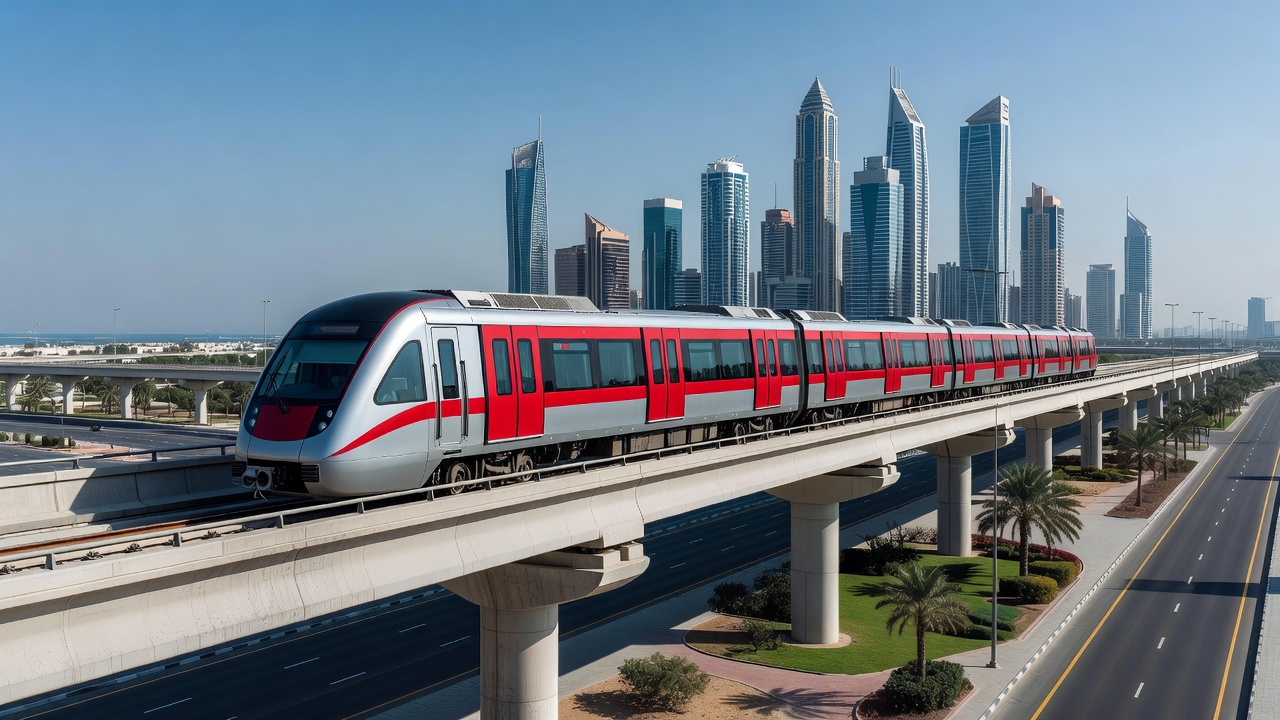

The Roads and Transport Authority has released data showing that Dubai’s integrated mobility network handled 348.1 million passenger trips in the first six months of the year. This equates to an average of 1.9 million riders per day using a combination of public transport, taxis and shared mobility options. According to the authority, the figures underscore the growing reliance on these services amid the emirate’s expanding population and tourism sector.
Dubai Metro emerged as the dominant mode with 136.5 million passengers, representing 39.2 percent of all journeys. Public buses followed with 85.1 million trips while taxis accounted for 88.9 million. The RTA figures show shared mobility contributed 25.7 million rides, marine transport 8.1 million and the Dubai Tram 3.8 million during the period. Limousine services added another 5.7 million trips separate from the main totals.
Together metro and buses carried 64 percent of public transport users, cementing mass transit’s central role in daily commuting. Busiest metro stations included BurJuman with 8.4 million passengers and Union with 6.5 million, the authority’s breakdown indicated. These numbers reflect how the network supports key commercial and residential hubs across the city.
The latest ridership data builds on a long-term trend in which the share of journeys made through public transport and shared mobility has surged from 6 percent in 2006 to 22.3 percent in 2025. RTA data places this growth as evidence of a steady shift toward cleaner and more efficient transport options. Such progress aligns with broader urban development strategies in the emirate.
Mattar Al Tayer, director general and chairman of the board of executive directors at the RTA, stated that the figures reflect the success of Dubai’s long-term vision. “We are advancing a strategic vision that positions public transport as the first choice for daily mobility among residents and visitors, while cementing Dubai’s standing as a global model for sustainable mobility,” Al Tayer said. He added that this development demonstrates a commitment to sustainable mobility solutions.
The authority is advancing major infrastructure projects to further enhance capacity. These include construction of the 30-kilometre Metro Blue Line and approval of the AED34 billion Gold Line spanning 42 kilometres. Plans also encompass the introduction of 637 new low-emission buses, including 40 electric ones, with commercial air taxi services slated for launch before the end of the year.
Driverless taxis have already begun operation as part of the expansion efforts. The RTA aims to increase the share of trips made by public transport and shared mobility to 25 percent by 2030. This target supports the goals outlined in the Dubai 2040 Urban Master Plan and the Dubai Economic Agenda D33, according to the authority.