


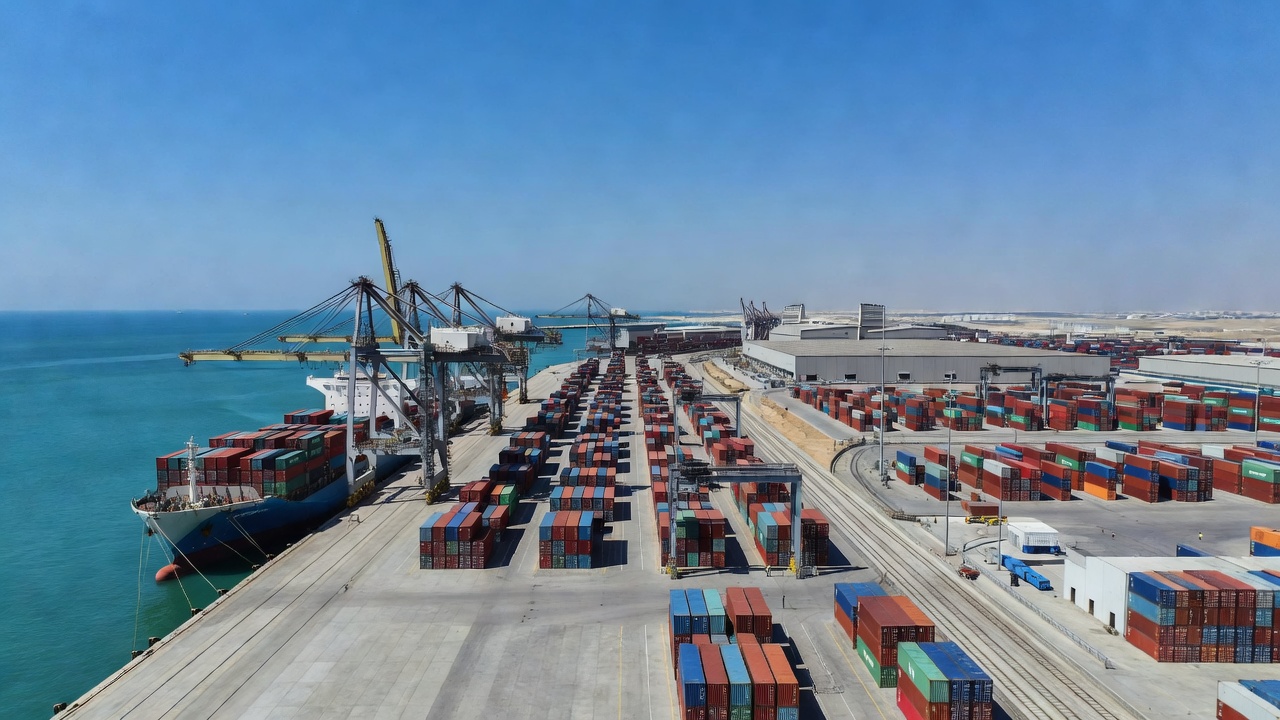

Gulftainer unveiled the initiative in a corporate statement that positions Sharjah as the hub for an interconnected network spanning maritime terminals, logistics facilities, shipping lines, industrial zones and digital platforms across the UAE, Indian Subcontinent, China, East Africa and the GCC. The company said the plan would transform its operations into a comprehensive global trade infrastructure business while reinforcing supply chain continuity through multimodal connectivity. Khorfakkan Commercial Terminal stands at the center of the effort, serving as a key gateway on the Gulf of Oman that bypasses the Strait of Hormuz for faster access to international shipping routes.
The announcement detailed expansion of Khorfakkan Commercial Terminal from its existing 3.5 million TEU capacity to an initial 5 million TEUs, with a long-term master plan targeting more than 10 million TEUs annually. Integration with Etihad Rail will create full sea-road-rail connectivity, according to the company’s release. Complementing the port are Al Dhaid Logistics Park and Sajaa Logistics Park, which together will deliver 2.3 million TEUs of inland logistics capacity once completed.
Gulftainer’s statement described how the ecosystem links ports to logistics complexes, border crossings, transport networks and trade corridors to enable smoother flows of goods. The $2 billion investment will also incorporate intelligent digital platforms designed to optimise operations and enhance efficiency at every stage. Such infrastructure, the company added, supports both commercial growth and resilience against regional supply disruptions.
Sharjah Ports, Customs and Free Zones Authority figures have previously shown steady increases in container volumes at Khorfakkan, a trend the new strategy aims to accelerate through added capacity and connectivity. The release noted that the parks will handle diverse cargo types, including refrigerated and industrial goods, aligning with broader UAE efforts to expand non-oil trade. Gulftainer operates the terminal and parks as part of its regional portfolio that already spans multiple countries.
In the announcement distributed via its newsroom, the company framed the development as a response to rising demand for reliable logistics solutions amid global trade shifts. Future phases include enhanced shipping services and industrial infrastructure that will feed into the logistics chain. The initiative builds on existing assets such as Sajaa Dry Port, located 70 kilometres inland, which already functions as the UAE’s largest bonded facility.
Gulftainer’s strategy also targets underserved markets in East Africa and the Indian Subcontinent with dedicated services originating from Khorfakkan. The company stated that round-the-clock operations and efficient handling at the terminal have already established it as a national logistics lifeline. This latest investment underscores ongoing commitment to scaling infrastructure that connects sea, land and digital elements into a single seamless system.