



The world’s most performed cosmetic operation is carried out on the organ of sight, in a market where a published survey found dry eye symptoms in more than six of every ten respondents.
For the first time since the survey began, eyelid surgery is the most common surgical cosmetic procedure in the world. The International Society of Aesthetic Plastic Surgery’s Global Survey for 2024, released in June 2025, recorded 2.1 million blepharoplasty procedures worldwide, displacing liposuction at the top of the table, within a global total of 17.4 million surgical procedures.
Dubai sits where that trend meets one of the region’s fastest expanding provider markets. Dubai Health Authority figures put licensed healthcare facilities in the emirate at approximately 5,800 in 2025 against 5,340 in 2024, growth above 8 percent, with the private healthcare workforce rising to more than 69,400 from 64,100 a year earlier.
The most common complication is already the local baseline
There is a clinical detail specific to this market that rarely appears in the growth commentary. The first cross-sectional study of dry eye disease in Dubai, published in BMC Ophthalmology, estimated prevalence at 62.6 percent among 452 respondents surveyed in 2019, with 42 percent of those affected in the severe category. Female sex, screen time above six hours daily and contact lens use were each associated with it. A survey of a university and hospital population is not a national estimate, but it describes closely the demographic that presents for periorbital surgery.
That matters because dry eye is the most frequently reported complication of eyelid surgery. A ten year, 892 case single surgeon series published in JAMA Facial Plastic Surgery reported dry eye symptoms in 26.5 percent of patients and chemosis in 26.3 percent, both significantly higher after concurrent upper and lower blepharoplasty. A 2025 systematic review of lower eyelid blepharoplasty put overall success at 96.8 percent, with chemosis at 27.4 percent and new onset dry eye persisting beyond eight weeks at 6.5 percent.
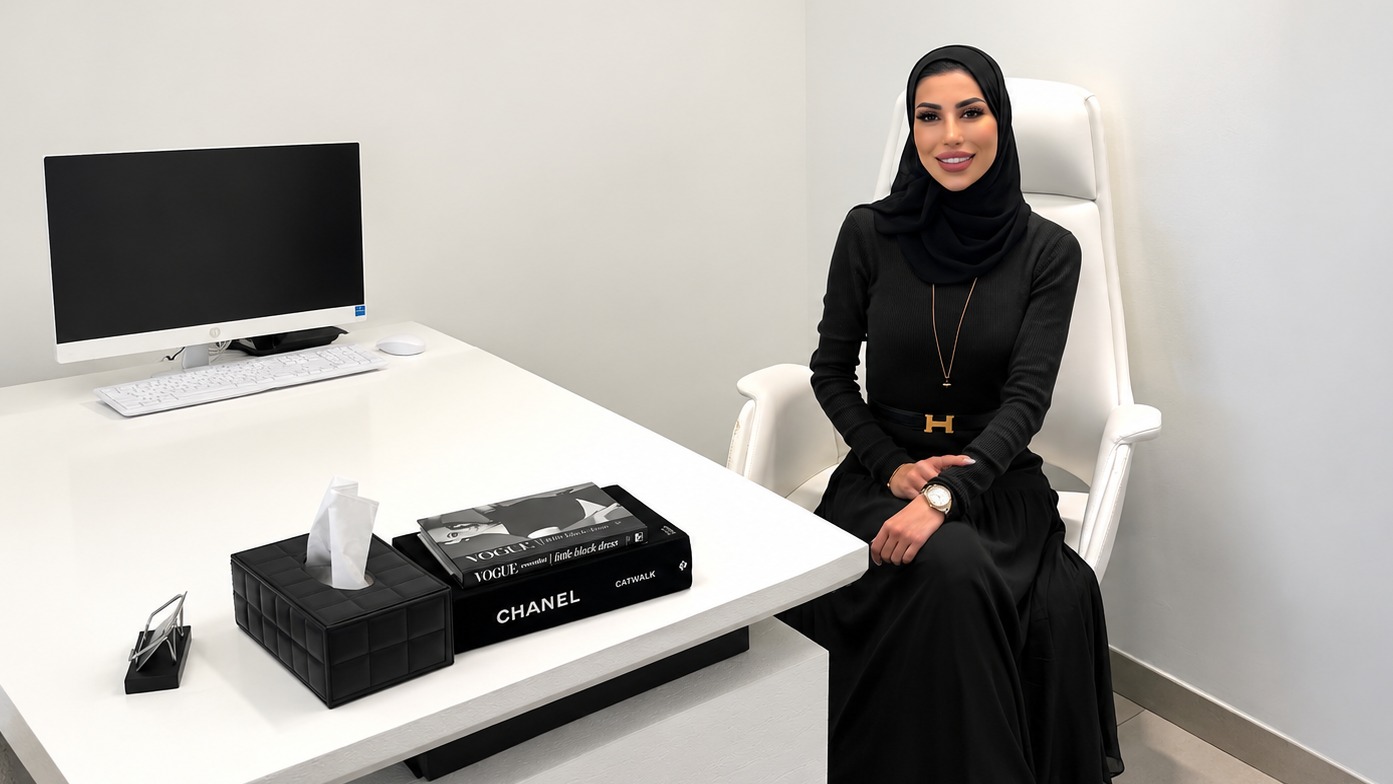
Which is why how the procedure gets described matters commercially as well as clinically. Dr Amina Nabil, the Emirati ophthalmologist and oculoplastic surgeon who founded Dubai’s La Vogue Experts Clinic, told Gulf News in July that the misconception she meets most often is that eyelid work is purely cosmetic, when “in reality, the eye area often involves both functional and aesthetic concerns.” Her framing of the field is anatomical rather than promotional: “The eye area affects vision, expression, confidence and how people connect with the world.”
A subspecialty that cannot scale quickly
Oculoplastic surgery, the discipline covering the eyelid, orbit and lacrimal system, sits behind an ophthalmology residency plus one or two further years of fellowship. Programmes accredited by the American Society of Ophthalmic Plastic and Reconstructive Surgery generally train a single fellow on alternating year cycles. A 2024 lecture published in the journal Orbit noted that France has only five academic hospital practitioners specialised in the field. Supply of the credential expands at the rate of fellowship places, not the rate of the procedure.
Nabil’s route through it ran across three countries. She took her medical degree at the University of Jordan, returned to Dubai for her internship and ophthalmology residency with the Dubai Health Authority, obtained Arab Board certification, then trained in oculoplasty with a visiting French specialist and completed aesthetics programmes in London and Paris. Her published professional profile lists her as a board certified ophthalmologist working across Dubai Hospital and her own clinic, a split that keeps a private aesthetic practice anchored in public hospital casework. “My journey began with ophthalmology, and it remains the heart of my work,” she said.
On the procedure itself she was blunter than the sector’s norm, saying eyelid surgery “carries real risks and should only be performed by experienced specialists following careful assessment.” Organisers of the TR Doctors conference in Marbella have announced her as an official speaker on 16 October, presenting on upper blepharoplasty combined with internal browpexy, a brow suspension carried out through the eyelid incision rather than through a separate forehead approach.
The regulator has moved the same way. DHA’s Standards for Non-Surgical Cosmetic Procedures, effective from February 2025, detail facility, professional and consent requirements, and Dubai’s aesthetic medicine licensing route requires documented supervised casework rather than a certificate alone.
Restraint is where a specialist claim is actually tested. “My goal is not to change someone’s identity,” Nabil said. “It is to restore balance, freshness, comfort and confidence in a natural way.” Where the baseline condition is this common, the assessment does more work than the operation, and the right answer at a first consultation is sometimes to wait.
One qualification belongs in any honest account. The credential is not the only route to competence: facial plastic and plastic surgeons with dedicated periorbital training perform much of the world’s blepharoplasty safely, and the published record is reassuring, with the 2025 lower eyelid review finding no vision threatening events and a separate review putting vision loss after facial aesthetic procedures at 0.0008 percent. The constraint is arithmetic, not standards. Fellowship trained supply cannot expand at the pace the procedure is growing, and a market adding hundreds of facilities a year will meet the gap somewhere.
What is missing is measurement. No UAE specific figure for blepharoplasty volume is published, since ISAPS reports country level data only where response rates allow. Dubai counts its facilities, its licensed professionals and its health tourists precisely. The procedure now leading the global table is the one it does not yet count.