



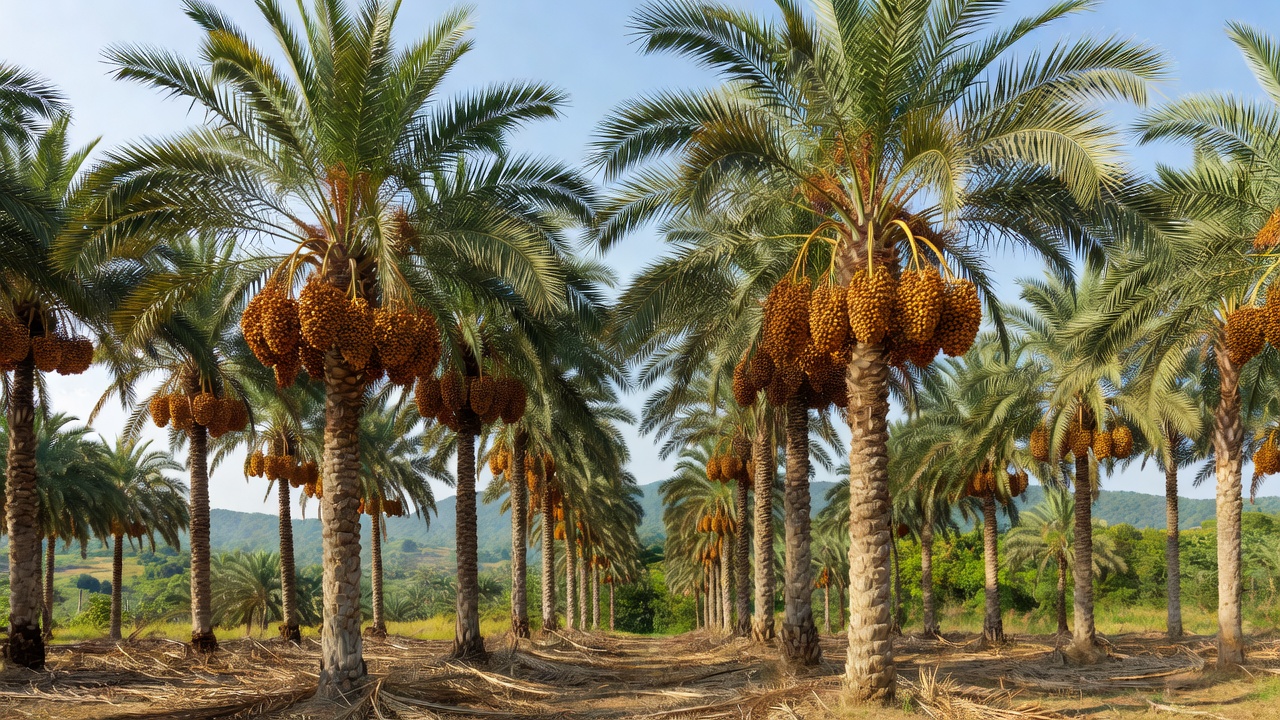

Cultivation of date palms donated by the UAE has advanced steadily across China, with eight varieties producing fruit for a second year in 2026 at sites operated by the Coconut Research Institute of the Chinese Academy of Tropical Agricultural Sciences. The trials now cover 899 mu, or roughly 60 hectares, spread among 18 cities and counties in Hainan, Yunnan, Sichuan, Guizhou and Guangxi, a Xinhua assessment found. Researchers continue to gather data on adaptation, focusing on varieties that first fruited in 2025 in locations including Wenchang, Yuanjiang and Panzhihua.
The Chinese Academy of Tropical Agricultural Sciences received 25,000 seedlings from the UAE in two batches between 2021 and 2024, building a germplasm resource nursery that supports ongoing trials. This followed a 2019 consensus between the two countries to develop China’s date palm sector through shared expertise in breeding and cultivation techniques. The academy’s director, Hu Wei, stated that cooperation has led to breakthroughs in seedling breeding, pest and disease control, post-harvest preservation and deep processing.
According to a 2023 FAO report on the global date palm industry, Arab countries account for about 75 percent of worldwide production, which exceeds 8.6 million tons annually, while China has imported an average of 12,000 tons of dates per year. The UAE ranks among the leading exporters, with shipments surpassing 240,000 tons in 2020 data from the same report. The introduction of UAE varieties aims to establish a viable local industry in suitable Chinese regions, building on the palms’ reputation as an economic crop rich in nutrients.
Xinhua reported that the project originated from a 2019 visit by UAE President Sheikh Mohamed bin Zayed Al Nahyan, who launched the initiative now known as the UAE-China Friendship Forest of Date Palm in Hainan. UAE Minister of Climate Change and Environment Dr Amna Al Dahak visited the site in 2025 and discussed its contribution to food security and bilateral agricultural innovation, The National newspaper reported. Dr Al Dahak noted the integration of Chinese capabilities with UAE agricultural goals during her tour of the thriving plantations.
The Coconut Research Institute has collected more than 230 date palm germplasm resources from various sources, including over 20 high-quality foreign varieties, to support breeding programs. Further plantings under the agreement, which targets a total of 100,000 seedlings from the UAE, are scheduled in coming years to scale up commercial potential. Officials involved in the program have outlined plans for a joint laboratory covering the full industry chain from germplasm evaluation to processing.
Date palms, often called the bread of the desert, have shown accelerated fruiting in Hainan compared with traditional timelines of three to five years in their native regions, according to institute data. The 2026 harvest builds directly on initial successes observed in 2025, confirming the viability of localized growing methods developed through the partnership. This expansion reflects sustained collaboration that both sides expect will enhance agricultural resilience in tropical areas of China.