



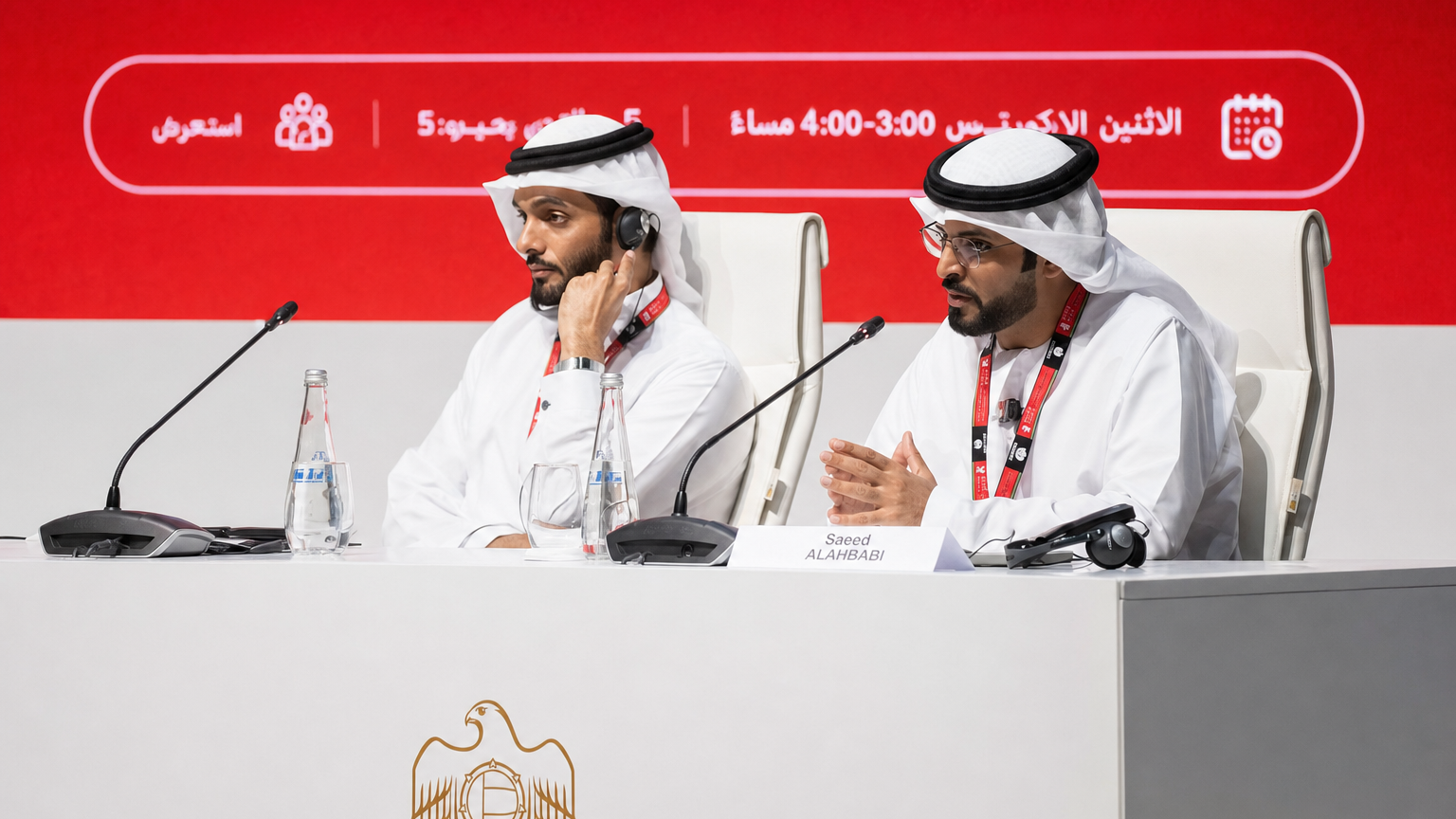

The session brought together specialists from both international organisations and UAE agencies to review approaches that address the complete cycle of drug-related challenges, according to a report from the Emirates News Agency. Participants included Hatem Aly, regional representative of the United Nations Office on Drugs and Crime, and Dr. Wadih Maalouf, global programme coordinator at the UNODC Prevention, Treatment and Rehabilitation Section. Dr. Saeed Al Ahbabi, a prosecutor at the Federal Drug Prosecution in the Office of the UAE Attorney General, and Brigadier Ahmad Al Suwaidi, deputy director of the General Department of Anti-Narcotics at Dubai Police, contributed local enforcement and legal perspectives while Fahad Haikal, director of the Government Communication Department at the National Anti-Narcotics Authority, moderated the exchange.
The National Anti-Narcotics Authority was established through a federal decree-law issued by President Sheikh Mohamed bin Zayed Al Nahyan in August 2025 to serve as the principal federal entity coordinating all aspects of narcotics control, a prior WAM announcement indicated. Sheikh Zayed bin Hamad bin Hamdan Al Nahyan was appointed chairman of the body, which operates independently under the Cabinet and replaced the former General Department of Anti-Narcotics within the Ministry of Interior. Its responsibilities encompass drafting policies, tracking smuggling networks, overseeing addict rehabilitation and fostering international data-sharing agreements.
A United Nations Office on Drugs and Crime assessment has underscored the value of combining enforcement actions with expanded health services across the Middle East to reduce both supply and demand. The Abu Dhabi panel examined ways to tailor such balanced frameworks to national conditions while improving treatment access and strengthening border controls. Discussions also covered coordination mechanisms that allow judicial, police and health authorities to operate under a single strategic umbrella.
The authority has pursued multiple prevention campaigns aimed at families, young people and educational institutions since its formation, according to statements from its leadership. These programmes support the national anti-narcotics strategy for 2024-2031 that the UAE Cabinet endorsed in late 2024 and include plans to incorporate security and safety topics into primary and secondary school curricula. Such initiatives seek to equip communities with early awareness tools that complement enforcement measures already in place.
Digital monitoring efforts connected to the authority have resulted in the identification and blocking of more than 2,297 malicious websites and social media accounts promoting narcotics. This activity forms one element of a wider initiative to counter online distribution channels that have proliferated in recent years. The authority has additionally increased cooperation with financial regulators to detect and disrupt money laundering linked to drug trafficking.
International collaboration remains a core component of the authority’s mandate, with regular exchanges of intelligence on smuggling routes conducted through UNODC platforms and bilateral arrangements. Hosting the 15th United Nations Congress on Crime Prevention and Criminal Justice in Abu Dhabi offered an opportunity to present the UAE model to global participants. The panel concluded by outlining steps to further harmonise domestic policies with international benchmarks on crime prevention and drug control.