



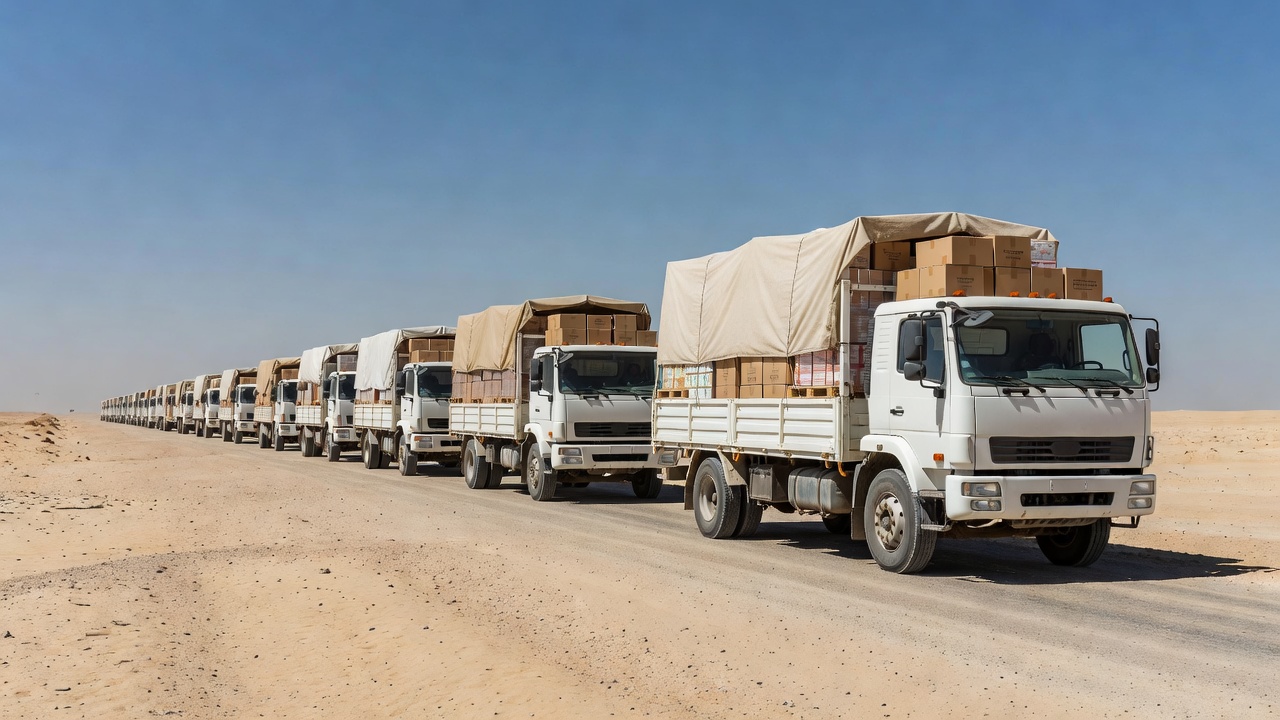

According to the Emirates News Agency, four UAE aid convoys carrying 781 tonnes of humanitarian aid entered the Gaza Strip under Operation Chivalrous Knight 3. The convoys were prepared at the UAE Humanitarian Aid Logistics Centre in Al Arish where teams manage sorting and dispatch to align with requirements inside the territory. This delivery continues the regular movement of relief supplies that has been maintained through the centre’s integrated system for receiving and forwarding assistance.
A Gulf News report from July 2026 placed the total humanitarian aid sent under Operation Chivalrous Knight 3 at 126,300 tonnes. The assessment by Gulf News noted that the figure included more than 13,000 trucks along with 785 relief flights and 25 aid ships since the operation began. These channels have supported the consistent transfer of food parcels, shelter materials and medical items to address documented needs.
Operation Chivalrous Knight 3 was launched on November 5, 2023 under directives from UAE President Sheikh Mohamed bin Zayed Al Nahyan. Sheikh Mohamed bin Zayed Al Nahyan’s instructions established the framework for air, sea and land bridges that have operated continuously. Updates from the Emirates News Agency have recorded the arrival of hundreds of additional convoys in the period that followed.
Similar shipments in recent months have included a consignment of 903 tonnes in five convoys that Gulf News reported in August 2026. Another dispatch covered 819 tonnes aboard 63 trucks in five convoys according to a September WAM dispatch. The varying loads demonstrate how the logistics centre adjusts volumes based on border conditions and field assessments.
The Emirates News Agency stated that the four convoys formed part of the structured effort to maintain aid flow without interruption. Staff at the Al Arish centre coordinate each stage from preparation to handover at the border. This approach has enabled the operation to respond to shifting priorities for nutrition and temporary accommodation in the Gaza Strip.
WAM reports indicate that overland convoys have accounted for a substantial share of total deliveries under the operation. By mid-2026 the accumulated truck count had surpassed 10,000 with individual convoys ranging from several hundred to over 1,000 tonnes. The pattern has allowed responders to scale assistance according to evolving humanitarian data from within the territory.