



The Emirates News Agency reported that the UAE and India are shifting their economic cooperation to include joint development of logistics corridors as part of efforts to build on the Comprehensive Economic Partnership Agreement signed in 2022. UAE Minister of Economy Abdullah bin Touq Al Marri held discussions with Indian counterparts this week to identify opportunities in logistics alongside new economy sectors, tourism and agriculture. The minister highlighted Madhya Pradesh as a promising destination for UAE companies given its diverse economy and growth potential in food processing and supply chains. Bin Touq invited Indian businesses to take advantage of the UAE’s regulatory environment and position as a regional hub.
Gulf News reported that 1,202 flights operate weekly between the UAE and Indian cities, providing strong aviation connectivity that supports expanding trade and investment flows. According to Khaleej Times data, bilateral trade surpassed 101.25 billion dollars in fiscal year 2025-26, with both sides aiming to double that figure to 200 billion by 2032. Cumulative UAE investments in India now exceed 25 billion dollars across infrastructure, renewable energy, logistics and technology. The partnership has also advanced through memorandums on ship repair facilities and virtual trade corridors linking customs authorities.
A meeting between Abu Dhabi Crown Prince Sheikh Khaled bin Mohamed bin Zayed Al Nahyan and Indian Prime Minister Narendra Modi took place on the sidelines of the BRICS Summit in New Delhi this week. WAM stated that the two leaders reviewed progress under the CEPA framework and discussed greater economic integration in defence, space, nuclear energy and innovation. The discussions included an announcement by the UAE’s International Holding Company to invest 11.5 billion dollars in an integrated greenfield aluminium project in Odisha. Both sides affirmed their commitment to broadening cooperation across sectors that align with national development visions.
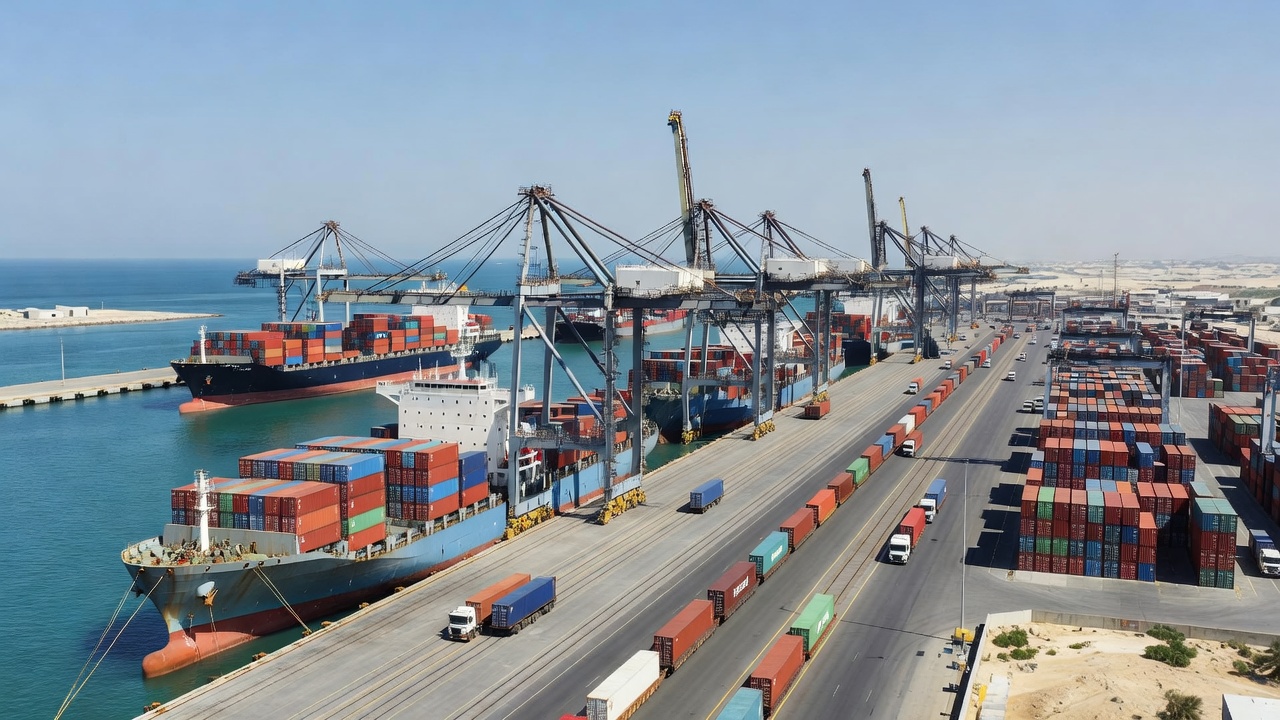
Regional tensions have accelerated work on alternative trade routes, with the UAE activating logistics corridors linking the Arabian Gulf to the Red Sea and Gulf of Oman. The UAE Ministry of Foreign Trade outlined steps that include expanded use of east coast ports such as Khor Fakkan and Fujairah along with road, rail and freight services through Oman. These measures have helped sustain supply chains even as the Strait of Hormuz faced disruptions. The developments complement the India-Middle East-Europe Economic Corridor, which aims to cut logistics costs by up to 30 percent.
DMCC Executive Chairman Ahmed Bin Sulayem told participants at the BRICS Business Forum that energy, critical minerals, food security, clean energy and artificial intelligence represent priority areas for further UAE-India collaboration. He stressed the need to move from planning to implementation to build resilient supply chains. PwC assessments of GCC-India ties have flagged logistics modernisation and digital infrastructure as key drivers of future growth in the relationship. Officials from both countries continue to coordinate on regulatory frameworks that facilitate cross-border projects and investment.