


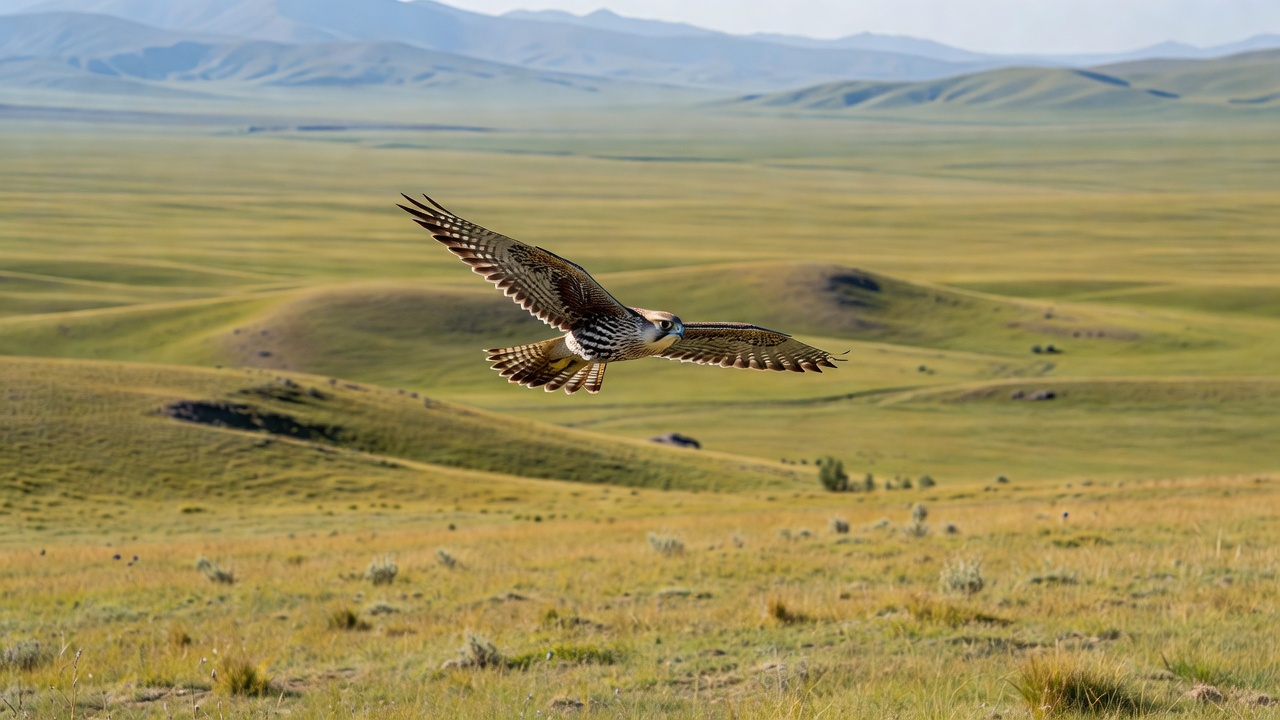

The Media Office of Abu Dhabi announced that the Sheikh Zayed Falcon Release Programme has released over 2,400 Saker and Peregrine falcons into their natural habitats across Central Asia and along migratory routes toward Siberia since its establishment in 1995. The initiative continues under the vision of His Highness Sheikh Mohamed bin Zayed Al Nahyan, President of the UAE, and builds on the legacy of the late Sheikh Zayed bin Sultan Al Nahyan, who placed environmental protection at the center of national development. This cumulative total reflects ongoing annual releases that support ecological balance while advancing sustainable falconry practices.
The programme operates through a partnership involving the Environment Agency – Abu Dhabi, the Ministry of Climate Change and Environment, the Mohamed bin Zayed Raptor Conservation Fund, the International Fund for Houbara Conservation and the Abu Dhabi Falcon Hospital. According to the announcement, this year’s operations in Kazakhstan marked the 18th consecutive year and included the release of 49 falcons, 20 of which were fitted with satellite-tracking devices to gather data on survival, dispersal and migration. The statement noted that all released birds also received electronic microchips and identification rings to enable long-term scientific monitoring.
His Excellency Mohamed Ahmed Al Bowardi, vice chairman of the Environment Agency – Abu Dhabi and the Mohamed bin Zayed Raptor Conservation Fund, commended the collaboration in the announcement. He said, “The programme demonstrates that preserving heritage extends beyond celebrating it. It also means developing it in ways that align with environmental and ethical values. It reinforces our responsibility towards nature and presents a UAE model that combines the preservation of heritage with the protection of wildlife and its sustainability for future generations.” Al Bowardi thanked the Forestry and Wildlife Committee of the Ministry of Agriculture of Kazakhstan for facilitating the field activities.
Satellite-tracking data from earlier releases had indicated that some falcons bred in Siberia, and Russian scientists this year provided the first direct field confirmation by documenting the nesting of a female Peregrine falcon on the Taz Peninsula. Identification markings verified that the bird was one released through the programme in Kazakhstan, with observations covering egg-laying, hatching and maternal care of the chicks. The announcement described the finding as evidence of the released falcons’ ability to adapt, survive and integrate into natural breeding habitats.
A report from the Environment Agency – Abu Dhabi placed the total number of released falcons at 2,088 after 27 years of the programme in 2021. Subsequent figures from a July 2025 dispatch by the Emirates News Agency showed the cumulative releases had reached 2,355. The latest milestone therefore indicates that additional birds have been returned to the wild in the intervening period.
The Mohamed bin Zayed Raptor Conservation Fund supports artificial nesting projects in Mongolia that contribute between 2,000 and 3,000 falcons annually. These efforts have helped protect an estimated 18,000 birds of prey each year, including around 4,000 Saker falcons, by mitigating risks such as electrocution on power lines. The International Fund for Houbara Conservation maintains annual production approaching 100,000 birds to support both wild releases and regulated sustainable hunting.