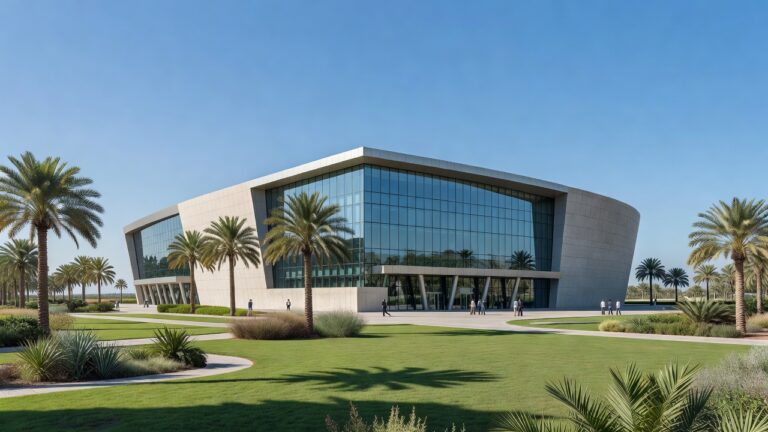



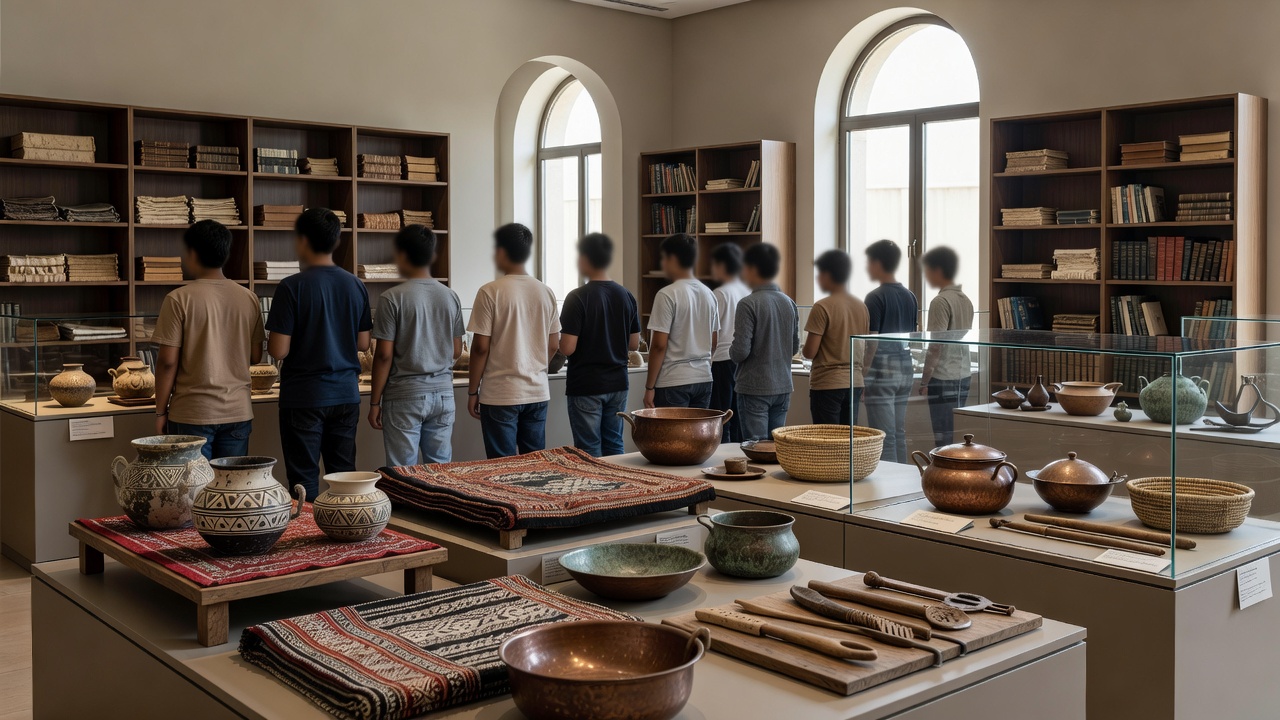

The Sharjah Institute for Heritage received the group of summer centre students participating in Oman’s 2026 programme themed around leadership and creativity, according to Sharjah 24. Headed by Dr Abdullah bin Saeed Al Busaidi, chairman of the executive committee for the North Al Batinah summer centres, the visit was arranged through the governor’s office to familiarise participants with institutional approaches to cultural safeguarding. Students gained exposure to the full scope of the institute’s documentation, research and rehabilitation activities focused on intangible heritage and cultural memory.
Abubaker Al Kindi welcomed the delegation and guided them through the Crafts Centre, Heritage Library, Manuscripts and Restoration Department, the building for international cultural heritage organisations and the Arab Heritage Centre. The Omani visitors examined artefacts that illustrate aspects of traditional Emirati daily life while receiving detailed accounts of their historical context and significance. They also witnessed segments of the Al Rawi Summer Camp, whose interactive formats seek to deepen young people’s engagement with heritage practices.
Al Kindi stressed the educational value of opening such institutions to student groups as a means of fostering long-term commitment to cultural continuity. “We believe that investing in young people’s awareness is the real guarantee of heritage’s sustainability, which is why we are keen to open the Institute’s doors to them, so they can see up close the efforts made to preserve and safeguard our cultural heritage, and understand that heritage is not simply a past to be recounted, but a living identity and a future we build together,” he said. The director added that direct encounters with programmes and collections help reinforce participants’ sense of identity and belonging.
The Sharjah Institute for Heritage hosts Omani students on heritage discovery visit within a wider framework of collaboration with Omani educational and youth organisations that promotes expertise sharing and heritage awareness. An ICCROM forum convened in Sharjah in October 2025 urged expanded roles for youth in protecting and revitalising Arab cultural heritage, an objective that such cross-border visits help advance. A UNESCO survey from 2020 found that 97 percent of young respondents support the ability of youth to promote cultural heritage while 91 percent view it as a potential income source.
Al Busaidi thanked the institute for its hospitality and organisation after the tour concluded with a meeting in the director’s office. He described the outing as a rich educational experience that heightened the students’ recognition of heritage’s importance to cultural identity. The delegation leader voiced expectations for ongoing exchanges between the parties to support younger generations.
Research published in the journal Heritage in 2026 showed that participation in heritage education activities correlates with reduced risk of school dropout, with one analysis indicating a strong negative relationship and gains in student motivation and community connection. These outcomes correspond to the institute’s emphasis on practical, youth-focused engagement during visits that combine observation with interactive learning. The approach mirrors broader regional initiatives that position cultural programmes as tools for building resilience and identity among young people across the Gulf.