



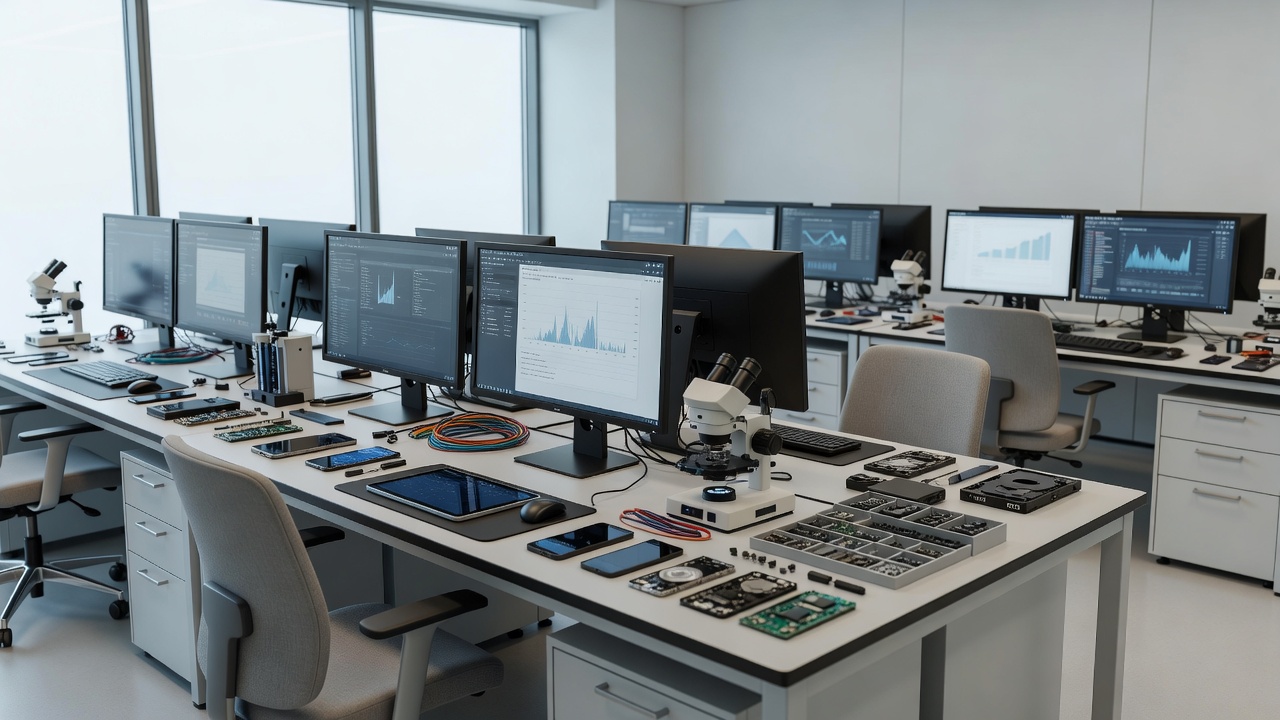

The Emirates News Agency reported that the Ministry of Interior presented its AI-driven digital forensics expertise at an INTERPOL meeting. Senior officials detailed the ministry’s implementation of artificial intelligence to enhance the examination of digital evidence in criminal cases. The presentation focused on practical applications that have been developed to address the growing complexity of cyber-related crimes in the region. The session took place on April 23 2026 as part of ongoing international efforts to standardize forensic techniques. Representatives from various countries attended the meeting to exchange knowledge on emerging technologies.
INTERPOL has identified digital forensics as one of three priority areas for its Innovation Centre in Singapore this year the organisation’s spotlight report indicated. The centre houses a Digital Forensic Lab that provides expertise in retrieving and analysing data from a range of electronic devices including smartphones and vehicles. This infrastructure supports law enforcement agencies in member states facing an increase in technology-enabled crime. The report emphasised that digital forensics has become a fundamental part of modern police investigations.
An INTERPOL assessment found that losses from online fraud involving synthetic media stood at 12 billion dollars in 2024 and are projected to reach 40 billion dollars by 2027. The global body operates Project Synthwave to combat the challenges of deepfakes and AI-generated content. Guidelines for handling synthetic media are being rolled out to aid in the detection and verification of digital evidence for legal purposes. Collaboration on these issues was a key theme at the meeting attended by the UAE delegation.
The UAE has actively participated in international initiatives on AI for law enforcement a UNICRI update from May 2026 stated. The Ministry of Interior contributed to training programs delivered to officials from 16 African countries on the use of AI-related technologies. Major General Khalifa Hareb Al Khaili has spoken at related forums about the importance of staying ahead of criminal use of new tools. These activities complement the ministry’s domestic efforts to modernize its forensic capabilities.
Toshinobu Yasuhira director of the INTERPOL Innovation Centre said innovation connects experts to co-create solutions. The UAE’s presentation added valuable perspectives from a country that has invested heavily in smart policing technologies. Such exchanges help build a unified approach to digital threats that cross national borders. Christopher Church senior mobile forensics specialist with INTERPOL highlighted the importance of data from connected devices. The combined knowledge shared at these meetings strengthens global law enforcement networks.
A 2018 survey by the French Ministry of Interior cited in INTERPOL publications highlighted gaps in law enforcement adaptation to technological change. Since then the organisation has expanded its focus on practical training and resource sharing in digital forensics. The April 2026 meeting served as another step in addressing these ongoing challenges through collaborative platforms. Participants discussed best practices for integrating AI without compromising ethical standards in investigations.