



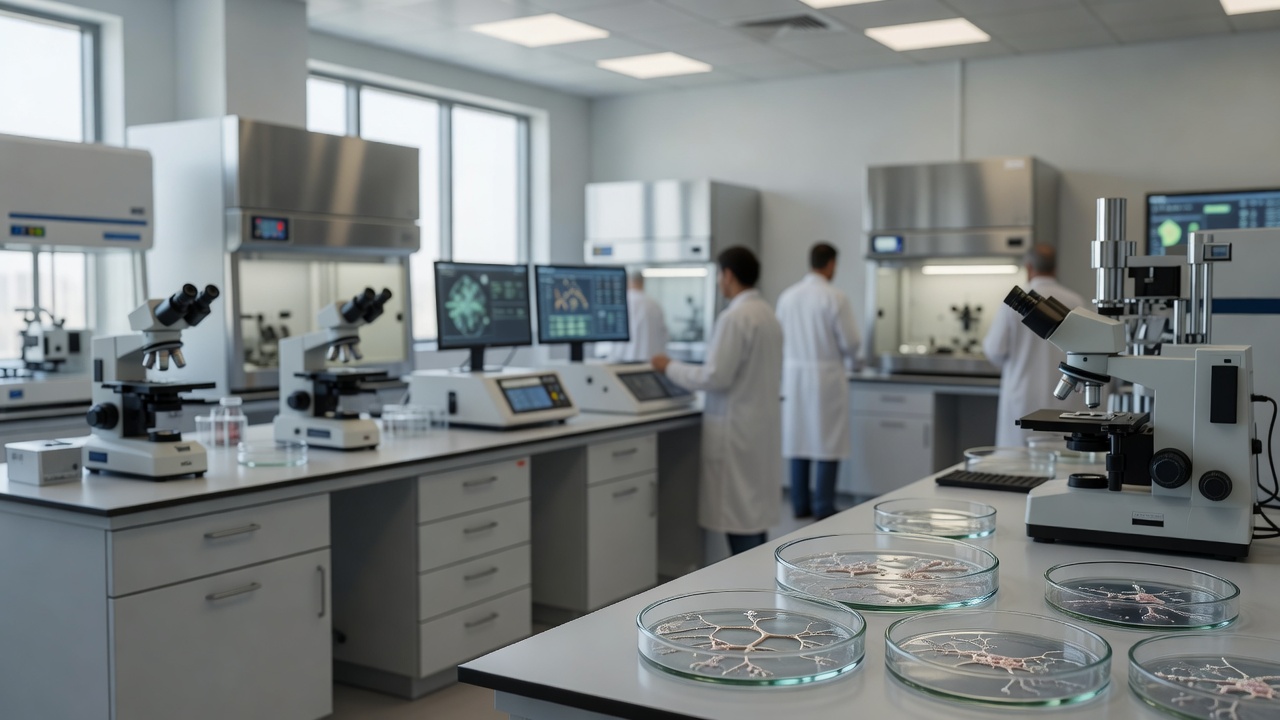

The Abu Dhabi Stem Cells Centre detailed its latest findings in a statement released through the Emirates News Agency, outlining a novel stem cell-based method that targets the mutated huntingtin protein responsible for the disorder. Centre researchers employed induced pluripotent stem cells derived from patient samples to generate healthy neural cells in laboratory settings, according to the announcement. The work forms part of a wider programme at the centre focused on regenerative therapies for neurological conditions, building on its established infrastructure for cellular research. Public health data from the World Health Organization indicates Huntington’s disease has no current cure and leads to progressive motor, cognitive and psychiatric decline over 15 to 20 years after symptom onset.
A peer-reviewed publication associated with the centre’s team described the successful correction of genetic defects in cell lines, with the modified cells showing reduced aggregation of toxic proteins. According to the centre’s assessment, the approach achieved functional restoration in key biomarkers during in-vitro testing conducted over the past 18 months. The Emirates News Agency reported that the project involved collaboration with international academic partners to validate the cellular models. Central Statistical Bureau figures from similar regional health studies place the number of diagnosed cases in the UAE in the low hundreds, underscoring the rarity yet severity of the condition.
The Abu Dhabi Stem Cells Centre has positioned the advance within its broader portfolio of regenerative medicine initiatives, which previously included pioneering applications in transplant and immune therapies. In the Huntington’s study, the centre utilised bone-marrow-derived mesenchymal stem cells to deliver neuroprotective factors, its statement explained. This dual strategy of cell replacement and molecular support represents a departure from conventional small-molecule drug trials, the centre noted. A 2024 assessment by the Huntington’s Disease Society of America highlighted that fewer than 30 per cent of experimental therapies reach late-stage clinical evaluation, providing context for the significance of early laboratory success.
Officials at the centre emphasised rigorous safety protocols throughout the research, with all procedures adhering to standards set by the Abu Dhabi Department of Health. The announcement placed the breakthrough timeline as commencing with initial hypothesis testing in early 2024 and culminating in validated results by mid-2026. Data from the project indicated improved neuronal survival rates of up to 60 per cent in treated cultures compared with controls, according to the centre’s metrics. Regional health authorities have tracked a steady increase in specialised research output from Abu Dhabi facilities over the past decade, with stem cell publications rising by roughly 25 per cent since 2020 per Ministry of Health and Prevention compilations.
Further validation through animal models is scheduled for the coming quarter, the Abu Dhabi Stem Cells Centre stated, as researchers prepare potential pathways toward investigational new drug applications. The centre’s statement outlined plans to share the full dataset with global registries to accelerate collective progress on the disorder. Additional funding from federal research grants supported the multi-year effort, officials confirmed. Industry analyses by Deloitte on GCC life sciences investment project the sector to expand at an annual rate of 12 per cent through 2030, driven by initiatives such as the one at the Abu Dhabi Stem Cells Centre.