



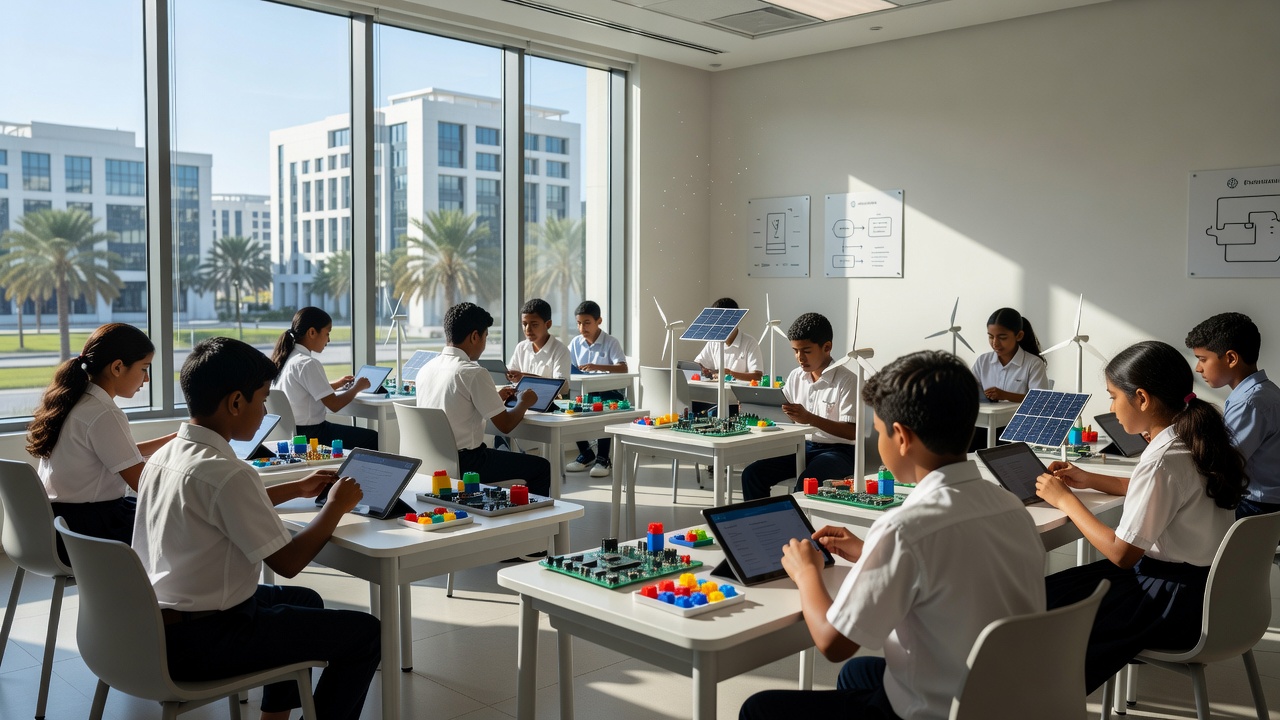

Alef Education has rolled out enhanced practical learning modules for thousands of students in UAE public schools as part of a broader effort to modernise the national curriculum, the Emirates News Agency reported. The initiative incorporates project-based activities, virtual simulations and direct industry collaborations that allow learners to apply concepts in fields ranging from engineering to environmental science. Ministry of Education officials have integrated the new resources into existing digital platforms serving more than 200 schools so far this academic year. The company first introduced practical components in select pilot programs two years ago before scaling them nationwide.
Data from the Ministry of Education shows student engagement in STEM subjects rose by 28 percent in schools that tested the initial practical learning tools during the 2024-2025 school year. Alef Education said the expanded program now includes dedicated resource kits for teachers along with real-time analytics that track individual progress on applied tasks. A company assessment found that participants demonstrated stronger problem-solving abilities compared with peers following traditional lecture formats. The rollout aligns with the UAE’s National Strategy for Education that sets measurable targets for innovation and applied skills by 2030.
Partnerships with local technology firms and universities supply the real-world scenarios embedded in the curriculum updates, according to the Emirates News Agency. Students now tackle challenges such as designing sustainable energy solutions and coding functional mobile applications within structured classroom settings. Alef Education noted that more than 50 industry experts have contributed content to ensure relevance to current market needs. The collaboration model has drawn interest from neighbouring GCC states seeking similar education reforms.
The practical learning expansion builds on Alef Education’s established AI-driven personalised learning system that serves students across multiple emirates. Company figures indicate the combined platform now reaches over 120,000 learners on a regular basis. Feedback collected from participating educators highlighted improved classroom dynamics and higher rates of student-initiated inquiry. The Ministry of Education continues to monitor outcomes through standardised assessments adjusted to capture both theoretical knowledge and applied competencies.
Regional edtech investment has grown steadily since the pandemic, with a Deloitte Middle East review placing the GCC market on track to exceed $1 billion annually by the end of the decade. Alef Education positioned its latest initiative as a direct response to employer demand for graduates equipped with practical experience rather than solely academic credentials. Training sessions for more than 1,200 teachers have accompanied the program launch to ensure consistent delivery across diverse school environments. The company plans further refinements based on performance data gathered during the current term.
UAE government statistics show the country has risen in international education rankings over the past decade, yet officials continue to target gaps in creative and technical application skills. The practical learning drive forms one element of sustained investment that includes updated facilities and expanded vocational pathways. Alef Education said it will publish a comprehensive impact report at the end of the academic year detailing shifts in student outcomes and teacher satisfaction levels. Additional emirates are expected to join the program in the coming months as infrastructure upgrades are completed.