


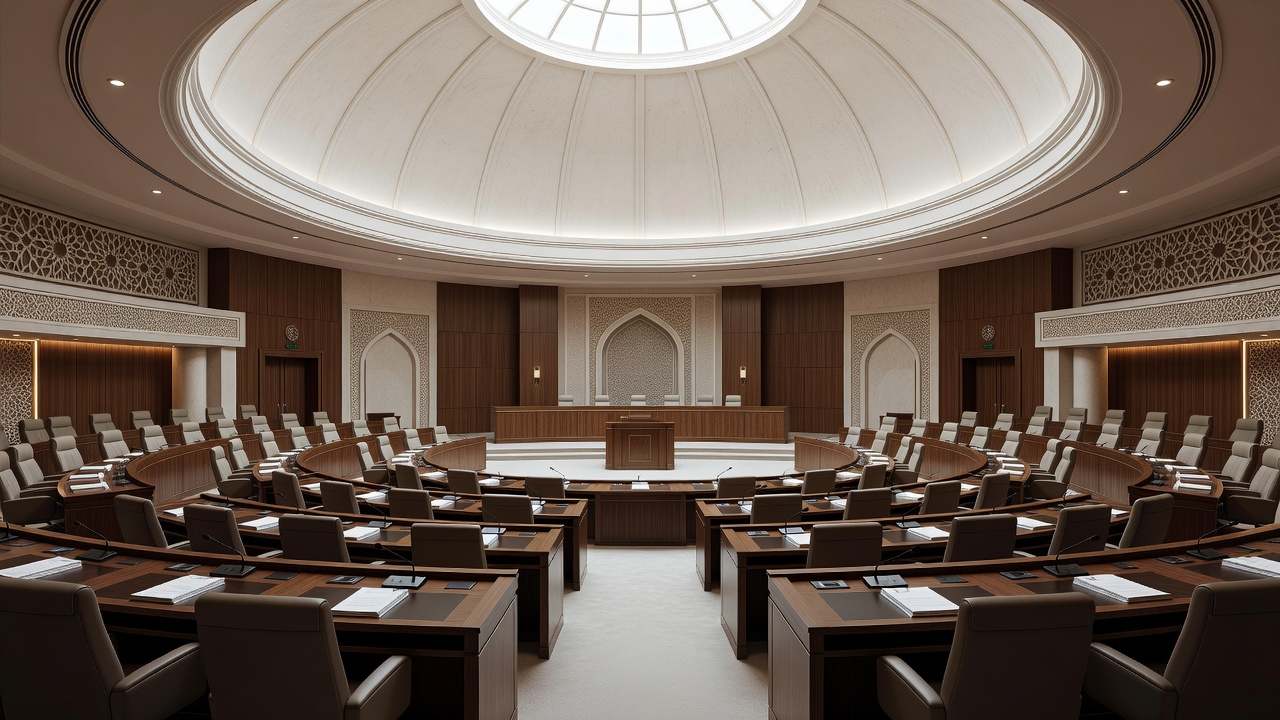

The fourth and final session of the Arab Parliament for the Child’s fourth term opens under the dome of the Sharjah Consultative Council on July 18 where the child delegates will review the agenda and approve recommendations on the chosen topic. The session focuses on positive family practices that safeguard childhood while examining challenges to family stability in the region. Ayman Othman Al Barout the Secretary-General of the Arab Parliament for the Child described the topic as stemming from the conviction that the family forms the foundational pillar for protecting children and shaping future Arab leaders according to the Gulf Today.
Delegations of boys and girls began arriving in Sharjah earlier in the month with the first groups from Djibouti and Mauritania followed by others to complete the roster of 54 participants. The lead-up programme that started on July 14 encompasses nine activities including field visits training workshops and committee meetings all designed to build parliamentary capabilities. WAM reported that the events will conclude with a ceremony marking the transition of current members into the Alumni Club.
His Highness Sheikh Dr Sultan bin Mohammed Al Qasimi Supreme Council Member and Ruler of Sharjah has extended patronage to the session reflecting his longstanding support for initiatives that enable Arab children to articulate their views in structured parliamentary settings. Sharjah24 reported that arrangements advanced in full coordination with partners to deliver a fitting close to the fourth term which forms part of a series that began in 2019. In the preceding session of the same term 56 children from 14 Arab countries gathered in Sharjah to debate related youth concerns the Sharjah24 archive shows.
The Arab Parliament for the Child operates as a platform for young representatives to gain hands-on experience in legislative processes while addressing issues that directly affect their age group across the Arab region. Al Barout noted in statements carried by multiple outlets that participants have shown notable maturity in tackling complex subjects throughout the term. University of Sharjah collaboration on a professional diploma for parliamentary leadership training has further reinforced the initiative’s educational foundation according to university announcements.
Committee work during the week will feed directly into Saturday’s formal sitting where recommendations are expected to cover family-centred approaches to child safety and development. The programme also includes interactive innovation sessions that encourage delegates to propose practical solutions grounded in their national contexts. WAM figures indicate the gathering draws equal numbers of male and female participants to ensure balanced representation.
Previous terms since the parliament’s 2019 launch have produced recommendations on topics ranging from education and cultural identity to health and digital safety the Arab Council for Childhood and Development has documented in related reviews. This final session of the fourth term will similarly compile outcomes for potential transmission to broader Arab forums. Delegates are scheduled to engage in direct discussions that build on the preparatory workshops completed earlier in the week.