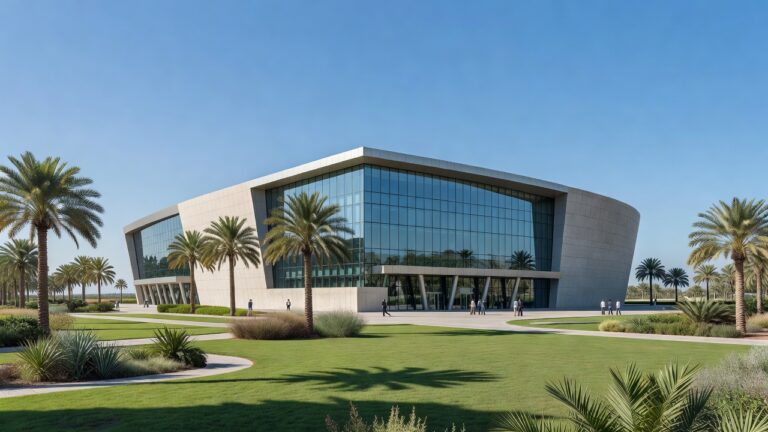



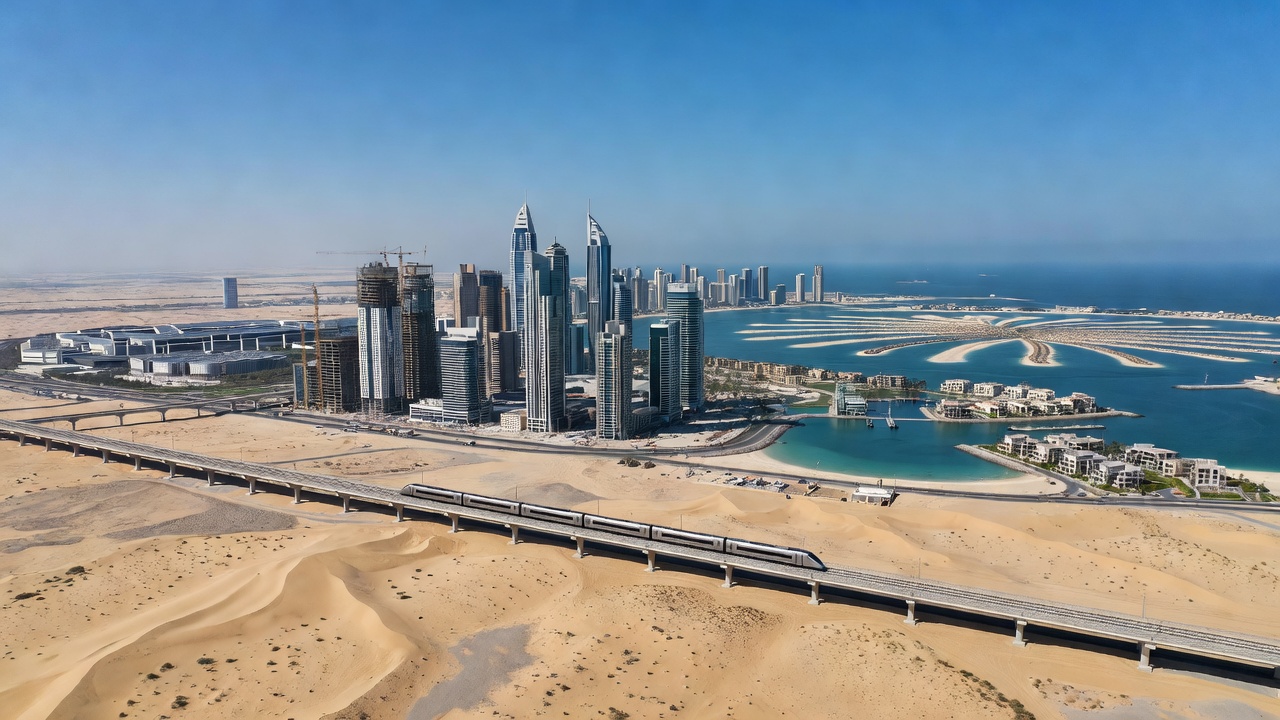

Gulf News detailed this week how nine key initiatives in transport, technology, finance and leisure are positioned to influence daily commuting, business operations and visitor experiences throughout Dubai, Abu Dhabi and Ras Al Khaimah over the coming decade. Analysts highlighted in the report that these efforts prioritise economic resilience through infrastructure and innovation while supporting tourism and real estate growth. Siraj Ahmed, director and head of strategy and consulting at Cavendish Maxwell, stated that priority should be placed on projects that underpin economic resilience and long-term competitiveness. Infrastructure and technology-led initiatives such as Etihad Rail and G42’s AI platforms are well positioned to support the UAE’s logistics, trade, and knowledge-based economy while continuing to attract global demand for connectivity and computing capacity, he added.
The transport schemes include the Dubai Loop underground network developed with Elon Musk’s Boring Company, which entered its foundation stage with an initial investment of Dh565 million and aims to reduce travel times dramatically between key districts. Etihad Rail’s 900-kilometre national network, scheduled for phased completion between 2026 and 2030, will connect all seven emirates and is projected to replace hundreds of trucks per train while cutting emissions significantly. Dubai’s Gold Metro Line, valued at $9.2 billion and targeted for 2032, will link existing metro routes with the national rail system and help avoid millions of annual road trips, according to the publication’s assessment that drew on comments from Matthew Green, head of research at CBRE MENA.
Financial district expansions form another cornerstone, with the DIFC Zabeel District expected to more than double the capacity of Dubai’s financial centre by 2040 and accommodate over 42,000 companies along with an AI-focused innovation ecosystem. In Abu Dhabi, the Al Maryah Island masterplan, backed by more than Dh60 billion, will add 1.5 million square metres of mixed-use space to reinforce the emirate’s role as a global capital hub. Green described the Zabeel District in the Gulf News report as one of Dubai’s most important drivers of future growth for the finance sector, the wider real estate market and the overall economy.
On the technology front, Group 42’s Project Stargate involves a 26-square-kilometre campus with an estimated $40 billion budget that will deliver substantial AI computing power in partnership with leading American firms including OpenAI, Oracle, Cisco and NVIDIA. The first phase targets a one-gigawatt cluster by the end of the decade to support model training and data management while positioning the UAE as a global leader in artificial intelligence infrastructure. Construction is already under way, and the development is expected to generate demand for specialised talent across the knowledge economy, the article noted.
Tourism and waterfront developments round out the pipeline, including Nakheel’s Palm Jebel Ali project that will expand Dubai’s coastline by 110 kilometres and house more than 35,000 families alongside dozens of hotels. Abu Dhabi’s planned Disney Resort, valued around $7 billion, and the Wynn Al Marjan Island integrated resort in Ras Al Khaimah, set to open in 2027 at a cost of roughly $5.8 billion, are forecast to diversify visitor profiles and strengthen leisure offerings. Green observed in the report that these two projects together could prove transformational by increasing the scale and depth of the UAE’s tourism sector and supporting higher-value demand across hospitality, retail and entertainment.
World Travel and Tourism Council figures show the sector contributed AED 267.5 billion to the national economy in 2025, equivalent to nearly 13 per cent of GDP, a benchmark these developments are designed to build upon through increased visitor numbers and related investment. The Ministry of Economy and Tourism has previously placed the travel industry’s contribution at around 9 per cent of GDP in 2022, indicating sustained expansion tied to such flagship projects. Ahmed cautioned in the Gulf News coverage that aligning supply with demonstrated demand and maintaining flexibility in delivery timelines would help preserve value while reinforcing the UAE’s global positioning.