



The Emirates News Agency reported that UAE leaders sent cables of congratulations to President Alassane Ouattara and the people of Côte d’Ivoire on the occasion of the West African country’s national day. President His Highness Sheikh Mohamed bin Zayed Al Nahyan, Vice President and Prime Minister His Highness Sheikh Mohammed bin Rashid Al Maktoum, and Deputy Prime Minister and President of the Presidential Court His Highness Sheikh Mansour bin Zayed Al Nahyan all dispatched messages wishing continued progress and prosperity. The communications underscored the deep-rooted friendship and cooperation binding the two nations across diplomatic, economic and cultural domains.
A bilateral investment treaty signed in 2021 between the United Arab Emirates and Côte d’Ivoire has laid groundwork for expanded economic collaboration, according to records from the United Nations Conference on Trade and Development. The agreement aims to promote and protect mutual investments while fostering an environment conducive to joint projects in sectors ranging from infrastructure to agriculture. Officials from both sides have repeatedly highlighted the treaty as a milestone that aligns with broader Gulf engagement across the African continent.
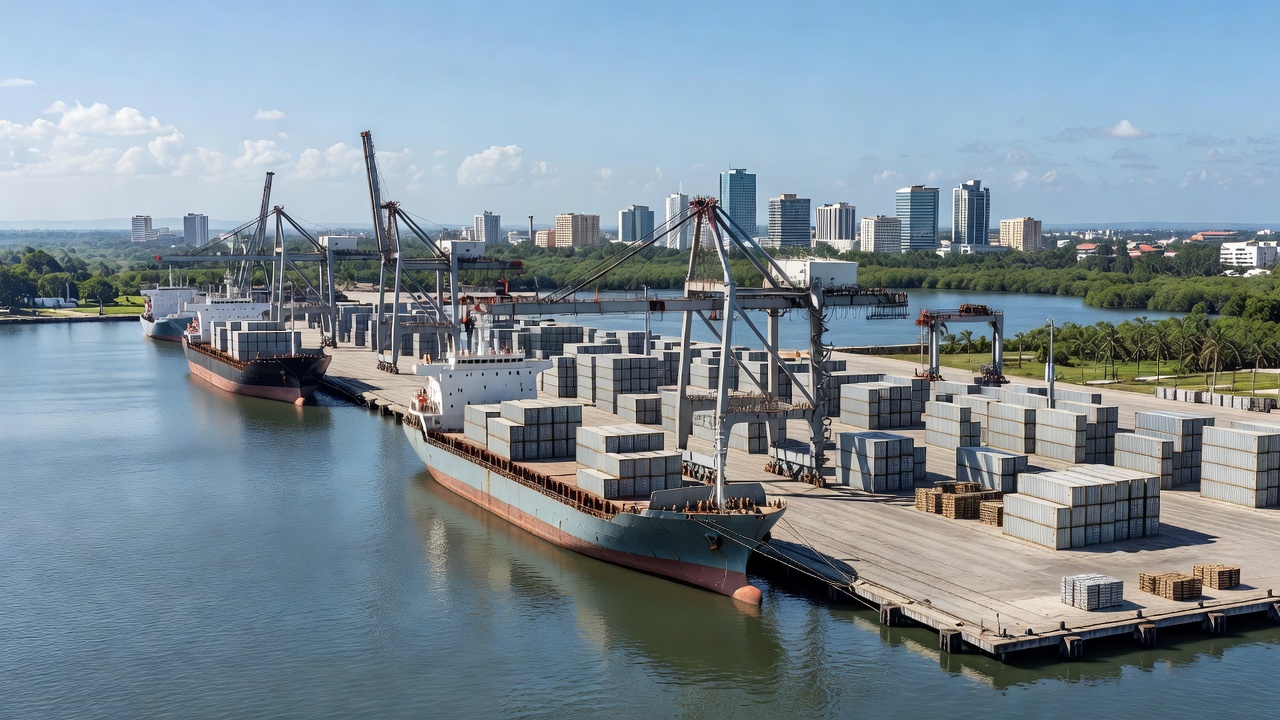
Data from the Observatory of Economic Complexity places United Arab Emirates exports to Côte d’Ivoire at $139 million against imports of $57.2 million in the latest measured period, resulting in a trade surplus of $81.9 million for the UAE. The flows encompass machinery, vehicles and processed goods moving southward while cocoa, rubber and other commodities travel northward. Trade volumes reflect growing commercial exchanges that have intensified since the early 2010s as both economies pursued diversification strategies.
The UAE has emerged as a leading investor across Africa with $97 billion in announced commitments during 2022 and 2023 alone, a New York Times assessment found. These outlays target strategic assets including ports, mining operations and renewable energy facilities in multiple countries, positioning the Emirates as a key partner for resource-rich economies. Côte d’Ivoire has featured in this expansion through targeted cooperation in logistics and agribusiness that supports local processing capacity and export readiness.
West African states including Côte d’Ivoire maintain membership in the African Continental Free Trade Area and the Economic Community of West African States, frameworks that a U.S. Department of Commerce overview said facilitate wider market access and regulatory harmonisation. The UAE has signed economic partnership agreements with several African nations to capitalise on these integration efforts and to channel capital toward sustainable development priorities. Joint initiatives have focused on technology transfer, capacity building and private-sector linkages that amplify the impact of direct investment.
Emirati development assistance to Côte d’Ivoire has supported healthcare, education and humanitarian projects over the past decade, according to patterns documented in multilateral cooperation reports. Such programmes complement the commercial relationship by addressing social infrastructure needs in a nation whose economy grew steadily after periods of political stabilisation. The intertwined diplomatic and economic ties continue to draw high-level visits and technical exchanges aimed at deepening partnership across multiple fronts.