



Non-oil trade between Kuwait and the UAE reached 14.8 billion dollars in 2025 and more than 1,700 Kuwaiti trademarks sit on the UAE register, yet Kuwait is missing from the caseload of the region’s biggest arbitration centre. Abdulrahman Alhouti’s firm has spent the year positioning itself as the Kuwaiti end of a corridor nobody owns.
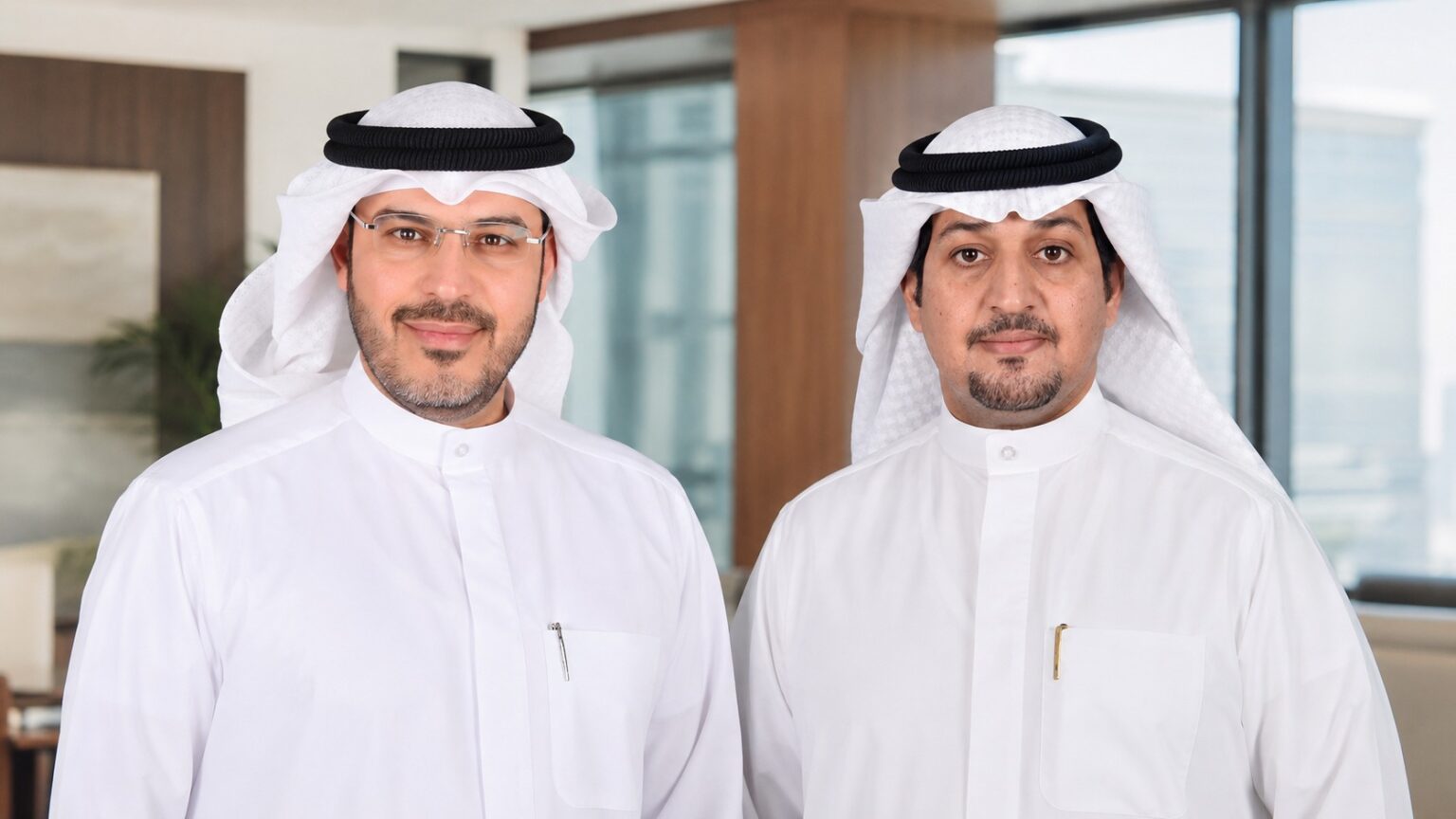
Abdulrahman Alhouti spent the first week of May in London, on an INTA panel about Middle East IP frameworks, alongside the UAE Ministry of Economy’s most senior intellectual property official, with a UAE legal consultant moderating. He spent 2024 on Dubai’s IP and litigation conference circuit and in the Gulf’s arbitration forums, and between trips his Kuwait City firm, Dar Al-Muhama, received the British, Russian and Canadian ambassadors at its offices. For a firm from a home market Alhouti himself has sized at more than 4,000 law firms, this is not networking. It is a map, and every line on it runs through the UAE.
The Home Market Math
Kuwait has one of the densest legal markets in the Gulf and one of the narrowest. Four thousand firms compete for a single economy, which makes the growth question a geography question, and the geography is not subtle. Kuwait’s commercial life has been migrating next door for a decade: non-oil trade with the UAE hit AED 54.5 billion, or 14.8 billion dollars, in 2025, up 9.1 percent on the year and roughly fivefold since 2010. The relationship carries nearly two-thirds of Kuwait’s entire GCC trade. Mutual investments passed 10 billion dollars by the end of 2024. And UAE Ministry of Economy data records more than 1,700 Kuwaiti trademarks registered in the Emirates, alongside 13 Kuwaiti commercial agencies and 15 companies. Every one of those numbers is a legal file: a registration, a contract, an enforcement action, eventually a dispute.
What Dubai Has That Kuwait Does Not
The files land in the UAE because the machinery is there. The Emirates joined the Madrid System in 2021 and drew over 2,000 international trademark designations in its first year; Kuwait remains outside the treaty entirely, so Kuwaiti brands going regional protect themselves through Abu Dhabi’s membership, not Kuwait City’s. On disputes, the Dubai International Arbitration Centre logged 355 cases in 2023, its third straight year above 250, with more than half of its 2024 intake international. In 2024 the UAE became the first Gulf state to break into the ICC’s five most used arbitral seats. When a Kuwaiti contractor signs a cross-border deal today, the odds are the dispute clause points west.
The Missing Country
Which makes one line of DIAC’s annual report genuinely strange. Participants came from 49 countries, and the most common foreign origins were Saudi Arabia, the UK, India, Qatar, the US and Iraq. Kuwait, source of two-thirds of nothing less than its own GCC trade flowing through the UAE, does not appear. The charitable reading is that Kuwaiti parties settle. The commercial reading is that the Kuwaiti end of the region’s busiest bilateral corridor has no established legal owner, on either side of the border.
The Firm’s Hand
That is the seat Dar Al-Muhama is playing for, and its cards are specific. The firm, founded in 2005, runs an IP practice spanning trademarks, patents, copyright and IP disputes, per the Asia IP directory. Alhouti is a certified arbitrator at the Kuwait Commercial Arbitration Centre, the Capital Markets Authority, the GCC Commercial Arbitration Centre and the Saudi Centre for Commercial Arbitration, the accreditation set of someone who expects to follow Kuwaiti parties to wherever their disputes are seated. He told Global Law Experts the firm handled complex arbitration and cross-border litigation across commercial, construction and financial services in 2024. And in its Legal 500 interview, the firm reports 95 percent client retention and a three-year objective of serving clients across the Americas, EMEA and APAC through strategic collaborations, while staying the first call for inbound investment into a Kuwait that still requires local agents and local counsel for everything.
The Crowded Side of the Border
The caveat is real: the UAE is the most contested legal market in the region, thick with global firms, and Dar Al-Muhama has announced no office there. Its stated route is collaboration, which puts part of its visibility in partners’ hands. But corridor work is bilateral by nature. A Kuwaiti trademark holder enforcing in Dubai, a Kuwaiti contractor answering a DIAC claim, a UAE investor entering Kuwait’s agent-and-counsel regime: the international firms hold the UAE end of those files. None of them holds the Kuwaiti end.
Direction of Travel
More than 170 flights a week now connect the two countries, and legal work follows commerce with a lag. The capital made the crossing years ago. Alhouti’s calendar says the mandates are still in transit, and that the firm standing at both ends of the corridor is the one that collects them.