



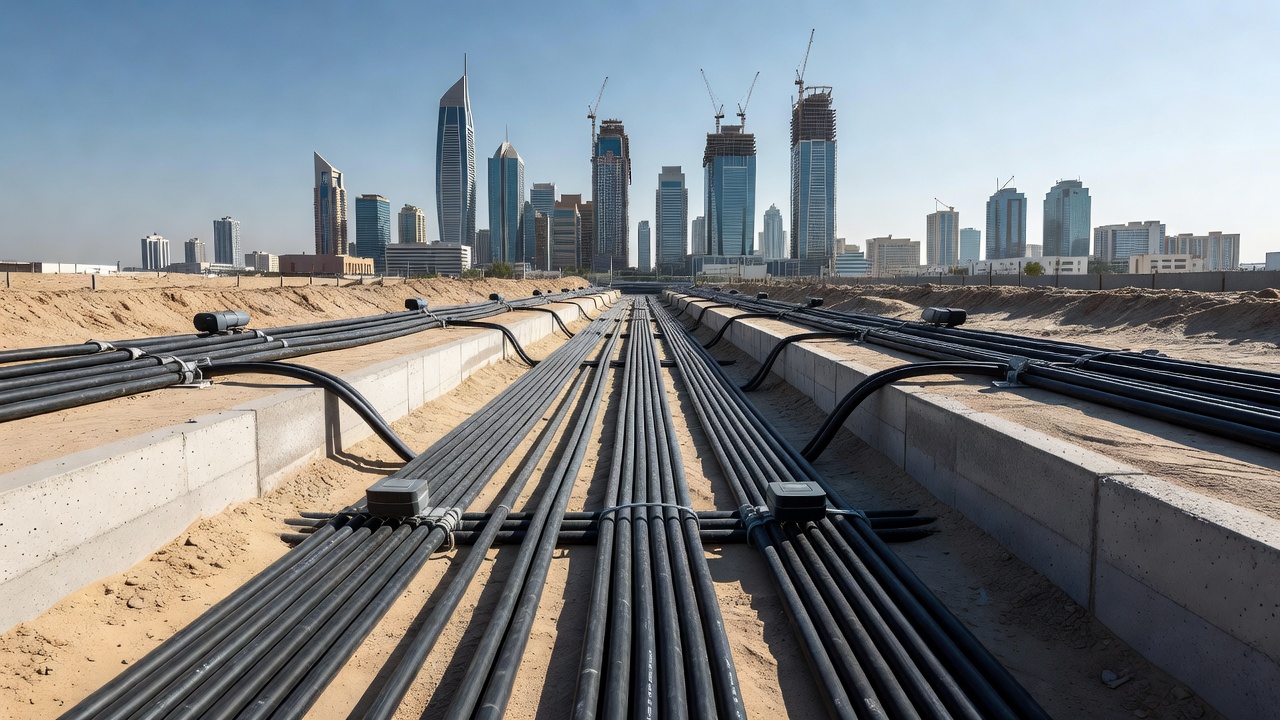

According to a statement issued by the Emirates News Agency, DEWA has created an in-house smart system designed to monitor cable conditions in real time and forecast maintenance needs before failures develop. The utility reported that the technology integrates sensors and data analytics to optimize performance across its network serving millions of customers in the emirate. DEWA officials noted that early trials demonstrated measurable gains in operational reliability while lowering unnecessary replacement costs. The initiative forms part of the authority’s wider digital transformation program that has unfolded over the past decade.
Public records from DEWA show the authority manages thousands of kilometers of underground cables that supply power to residential, commercial and industrial zones throughout Dubai. A PwC assessment of GCC utilities placed DEWA among regional leaders in adopting smart-grid solutions, citing its focus on in-house innovation to reduce dependence on external vendors. The smart system builds on prior investments in fiber-optic networks that the authority said now cover the majority of its distribution infrastructure. Integration teams have begun rolling out the platform in selected high-load areas this year.
Industry data published by the International Energy Agency indicates that predictive cable-monitoring tools can extend asset life by 15 to 25 percent while cutting outage durations in mature grids. DEWA’s latest sustainability report placed the utility’s system average interruption duration index among the lowest recorded by comparable city-scale providers worldwide. Engineers who developed the platform emphasized local talent was used at every stage, from algorithm design to field testing. The approach aligns with Dubai’s broader smart-city roadmap that envisions full digitization of utility services by the end of the decade.
According to DEWA, the smart system employs machine-learning models trained on historical performance data collected from the existing network. Maintenance crews receive prioritized alerts through a centralized dashboard that displays cable health metrics in real time. The authority added that this capability has already reduced emergency repairs in pilot zones by streamlining inspection schedules. Training modules for operational staff were rolled out concurrently with the first deployments.
Figures from the Dubai Electricity and Water Authority indicate that annual electricity demand in the emirate has risen steadily at an average rate of four percent over the past five years, placing greater stress on aging cable segments. The new monitoring platform is expected to help defer capital expenditure on cable replacements estimated in the tens of millions of dollars annually. DEWA stated that the system also supports sustainability targets by minimizing excavation work associated with premature replacements. Further expansion phases are scheduled to bring the technology to the entire distribution network within three years.
A separate review by regional consultants highlighted that utilities adopting similar in-house digital tools reported improved regulatory compliance and faster response to network anomalies. DEWA has consistently ranked first in customer satisfaction surveys conducted by independent auditors for the past several years. The smart system development reflects the authority’s strategy of fostering internal research and development teams rather than relying solely on imported solutions. Officials confirmed that additional enhancements, including integration with distributed energy resources, remain under active evaluation.