




The 12th edition of the World Green Economy Summit is set to commence on October 21 at the Dubai World Trade Centre, according to the Emirates News Agency. Organised by the Dubai Supreme Council of Energy, the Dubai Electricity and Water Authority and the World Green Economy Organisation under the patronage of Sheikh Mohammed bin Rashid Al Maktoum, the gathering will explore ways to scale successful green initiatives. The theme From Success to Scale: Showcasing the Green Economy reflects the focus on moving beyond pilot projects to widespread implementation. More than 3,300 participants from over 30 countries and 80 international speakers are expected to attend the two-day event.
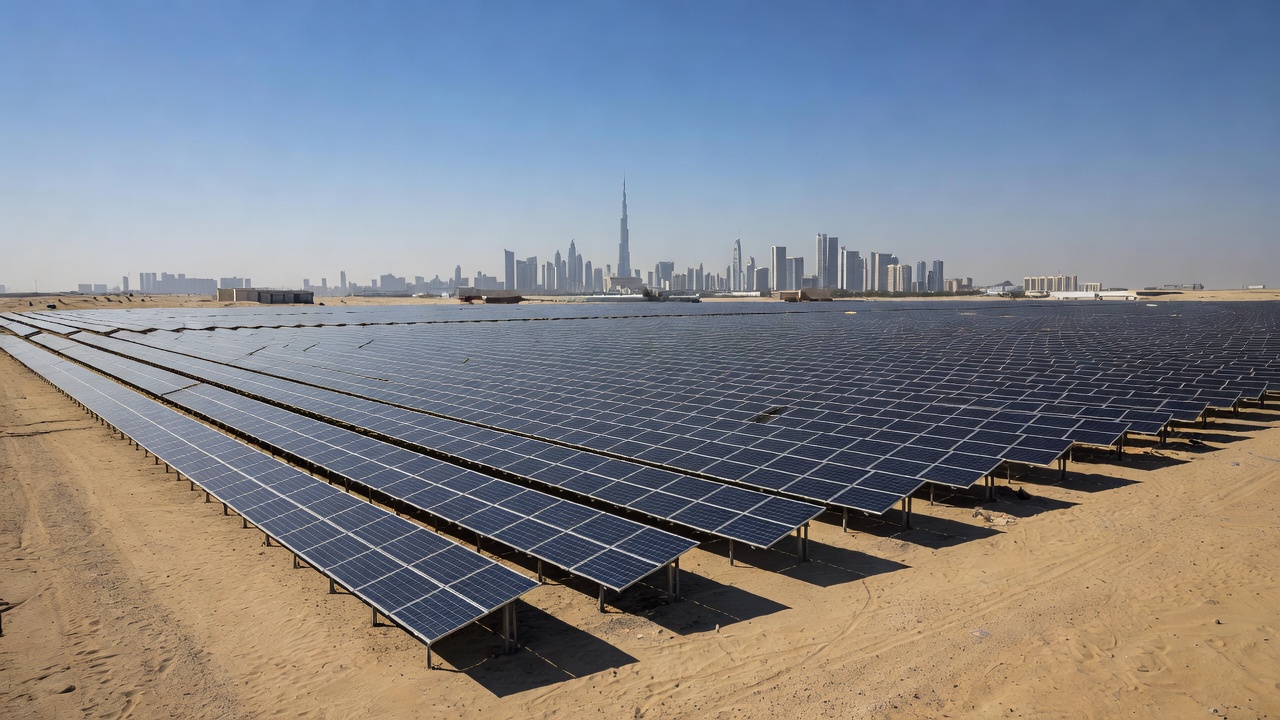
The summit will address four main pillars including energy technology and infrastructure, business strategy and transition, water and food security, and finance, a WAM assessment found. Cross-cutting themes of artificial intelligence, governance and system enablers will run through all sessions. Saeed Mohammed Al Tayer, managing director and chief executive of DEWA, highlighted the importance of scaling sustainable solutions. In remarks to WAM, Al Tayer pointed to the Mohammed bin Rashid Al Maktoum Solar Park as an example, noting its current capacity of 3,860 megawatts is on track to surpass 8,000 megawatts by 2030.
The global green economy has already surpassed 5 trillion dollars in annual value and is projected to exceed 7 trillion dollars by 2030, according to summit organizers. Companies generating revenues from green markets are seeing those revenues grow twice as fast as conventional business lines, the World Economic Forum notes. Such firms also benefit from a lower cost of capital and often enjoy valuation premiums of 12 to 15 percent. These trends underscore the economic incentives driving the transition, a WAM briefing indicated.
In the Middle East and North Africa region, operational renewable energy capacity reached 43.7 gigawatts by the end of 2025, reflecting a 44 percent increase in a single year, WAM figures show. Solar photovoltaic accounted for the majority at 34.5 gigawatts, with wind contributing 7.4 gigawatts. The project pipeline stands at around 202 gigawatts, up 54 percent from the previous year. This expansion demonstrates the region’s accelerating shift toward cleaner energy sources.
Climate finance remains a critical gap, with current annual investment at approximately 2.3 trillion dollars against a required 6.3 trillion dollars until 2030 to avoid the worst effects of climate change, a Climate Policy Initiative estimate found. The summit will explore ways to make climate projects more bankable to attract greater private investment. UAE initiatives such as the ALTÉRRA catalytic climate fund and contributions to international loss and damage mechanisms will be highlighted as models.
The circular economy forms another key focus, with the global market valued at 517.79 billion dollars in 2025 and projected to reach 888 billion dollars by 2030 at an 11.3 percent compound annual growth rate, according to industry analyses presented ahead of the summit. Recycled materials generate 80 percent fewer emissions than those from primary extraction. Sessions will examine how supply chain resilience and circular principles can support broader sustainability goals, an advance WAM release stated.