




UAE startup funding hit a first-quarter record even as deal numbers collapsed. Noor Sweid’s latest founder advice points to the quieter challenge behind the capital: companies have to professionalise as quickly as they grow.
UAE startups raised a record $419 million in the first quarter of 2026, up 47 percent year on year, while deal activity fell 45 percent to 37 transactions, the lowest first-quarter count in three years. Property Finder’s $170 million round alone represented about 41 percent of the total. The figures reported from MAGNiTT data show a market capable of supplying substantial capital, but increasingly inclined to concentrate it behind companies that have already proved they can absorb scale.
That changes the founder problem. Raising money remains difficult, but once traction arrives, the company that won its first customers through founder intensity has to become an organisation that can operate without founder intensity. The skills that create the first version of a business are not necessarily the ones that produce its tenth.
Growth changes the job
The regional funding ladder makes that transition particularly visible. In a May 2025 analysis, Noor Sweid argued that MENA venture funding had grown from $600 million in 2017 to $1.8 billion in 2024, while Series B remained materially thinner than the stages below it. Her company-reported analysis put 2024 Seed funding near $1 billion and Series B funding at roughly $550 million, describing Series B as the point where capital turns early traction into accelerated growth.
Money, however, is only half the transition. On 31 August 2026, Sweid used an Instagram post to describe what has to happen inside the company at roughly the same moment. “Many founders struggle because their calendar does not evolve as the company does. They stay in execution too long and growth stalls quietly,” she wrote. Her operating rule is sequential: learn a task, master it, build a process around it and then hand that process to someone capable of improving it.
It sounds like management advice. In a venture market moving toward larger, more selective rounds, it is also financing advice. Institutional investors are not simply buying revenue growth. They are underwriting whether a company can turn sales, hiring, product development and governance into repeatable systems rather than a collection of decisions stored in the founder’s head.
The founder becomes infrastructure
Sweid’s formulation is useful because it rejects the usual false choice between a hands-on founder and a professional management team. The founder does not disappear. The unit of work changes. Early on, she argues, founders live inside tasks. Traction requires systems. Scale requires leaders who own functions and outcomes. Eventually, the founder’s own job becomes strategy, resource allocation, direction and removing roadblocks.
Her description of delegation is equally specific: “learn a task, master it, create a process around it, and then teach the process to the new hire.” The new owner can then improve the system before passing it onward. What begins as delegation becomes organisational memory.
That thesis is landing as the UAE venture sector itself undergoes a similar institutionalisation. Global Ventures, founded in Dubai in 2018, says it manages $400 million in assets, a company-reported figure. Its ADGM entity has been an active regulated financial firm since April 2023, authorised to manage venture capital funds and undertake specified advisory and arranging activities. The firm now sits alongside managers including BECO Capital, Shorooq, Wamda Capital, MEVP and VentureSouq in a market whose infrastructure is considerably deeper than it was a decade ago.
An ecosystem asks the same question
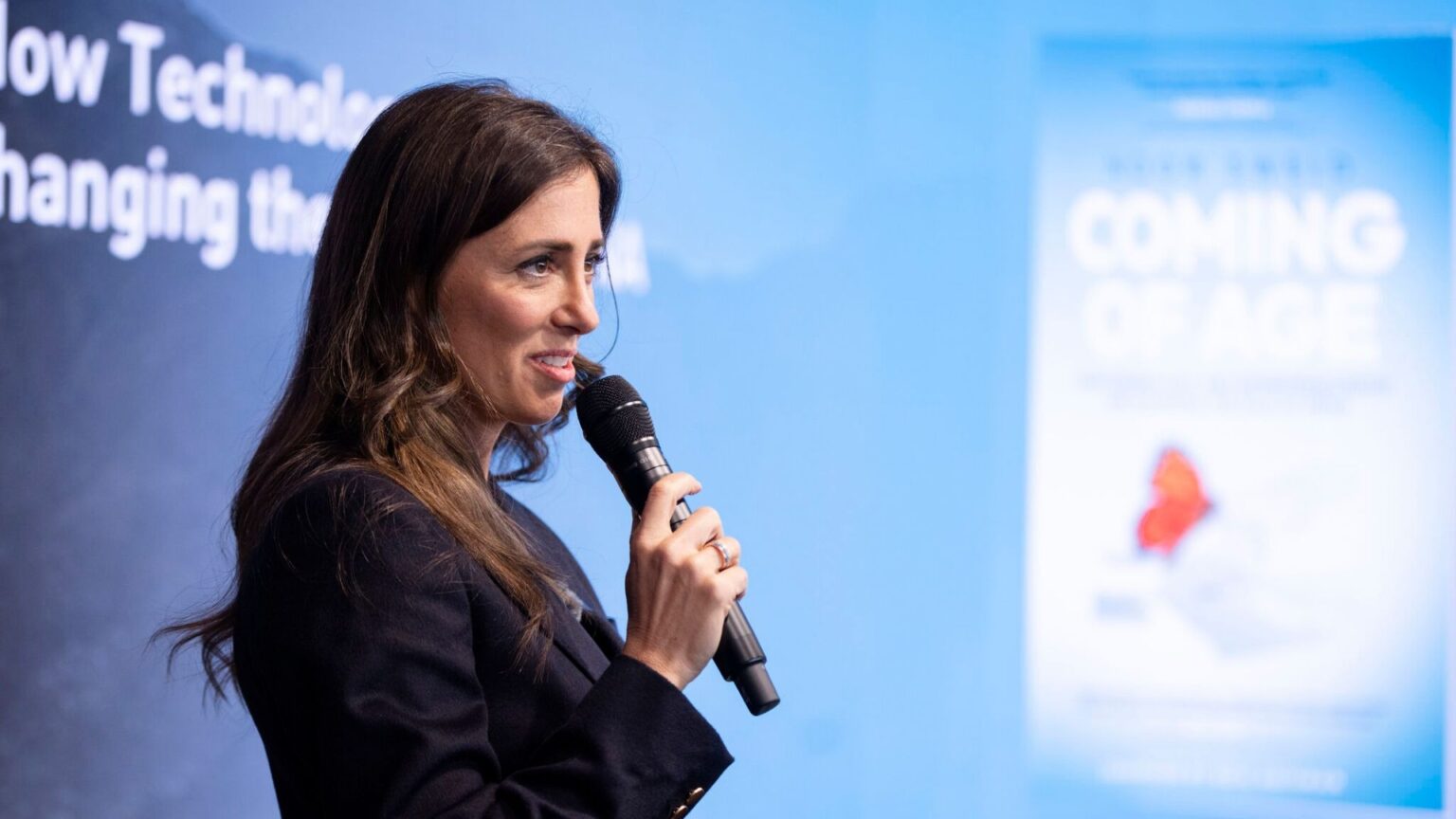
This week Global Ventures and the UAE Ministry of Economy and Tourism launched “Resilience by Design,” a study of how the country’s venture ecosystem developed and what its next phase requires. The launch discussion brought together the ministry, Dubai Future District Fund and Wamda founder Fadi Ghandour, with Sweid moderating. The report’s timing is apt: the UAE has spent a decade building capital, regulation and institutional support, and now has to ask whether those inputs repeatedly produce durable companies rather than isolated funding successes.
There is one limit to the management thesis. Better delegation cannot manufacture product-market fit or fill the region’s growth-capital gap. Sweid’s own Series B analysis argues that founders still encounter a broken point in the funding continuum. A perfectly processised company can still run out of capital.
But record funding combined with fewer deals means the companies receiving that capital are being asked to carry more of it, grow further and build organisations investors can trust beyond the founder. The UAE’s next startup bottleneck may therefore sit partly inside the founder’s calendar. A venture ecosystem becomes institutional when its companies do, and the moment a founder stops being the person who completes every task and becomes the person who builds the system for completing them is one of the places that transition begins.