



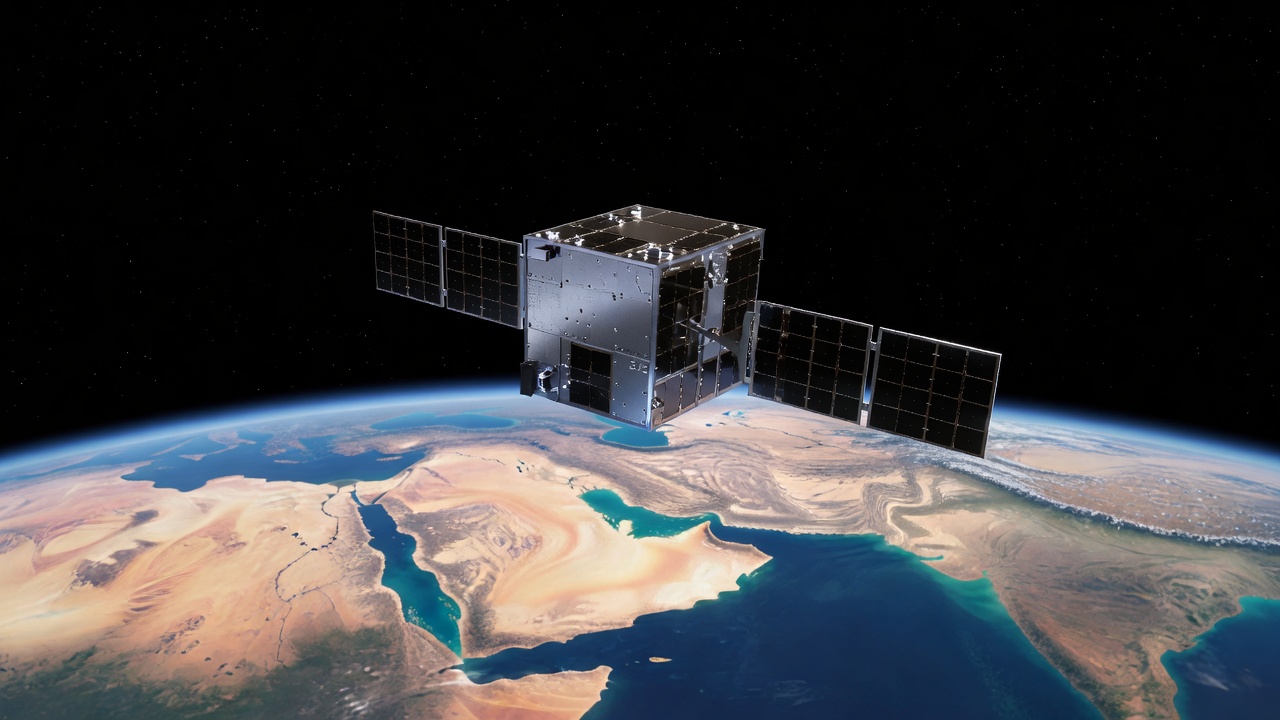

The National Space Science and Technology Center at the United Arab Emirates University has confirmed the successful completion of the first operational phase for its pioneering navigation satellite. NSSTC announces LEONAV-1 successfully completes first operational phase, marking the end of initial in-orbit testing for the UAE’s first dedicated navigation research platform. The low-Earth-orbit CubeSat demonstrated stable operations and data transmission capabilities during the period, the center reported. Officials highlighted the project’s role in strengthening domestic competencies in satellite engineering and signal processing.
Funded by the UAE Space Agency, the mission focuses on validating novel approaches to positioning, navigation and timing services from space, according to project documentation shared by NSSTC. Telecom Review reported that LEONAV-1 was launched on July 10, 2026, as a technology demonstrator aimed at future LEO-based systems that could offer advantages in speed and precision over conventional medium-Earth-orbit alternatives. The publication noted the satellite’s design supports real-time high-accuracy applications across multiple domains. Such advancements align with the UAE’s broader ambitions to diversify its technological base beyond oil, a strategy the government has pursued for more than a decade.
In remarks carried by Gulf News, a senior figure at NSSTC described the completion as an important building block for national space independence. The engineer pointed to the successful acquisition of GNSS-like signals from the platform as evidence of technical maturity. The report added that the project contributes to Emirati expertise in space technologies. This phase involved rigorous monitoring from ground stations in the UAE to ensure all systems performed within expected parameters.
The National Space Science and Technology Center, established to drive research and innovation at UAE University, continues to expand its portfolio of satellite projects. Previous initiatives have laid groundwork for this navigation-focused effort, with LEONAV-1 representing a shift toward practical applications in everyday positioning services. Data gathered during the first operational phase will inform the design of subsequent models, NSSTC indicated in its update. Collaboration with international partners on data analysis is also anticipated in coming months.
Additional testing phases are scheduled to build on the positive results obtained so far, the center said. These will examine long-term durability of the onboard instruments under continuous orbital conditions. The overall program seeks to position the UAE among a select group of nations capable of developing independent navigation solutions. Insights from LEONAV-1 are expected to influence policy decisions on future space infrastructure investments.