



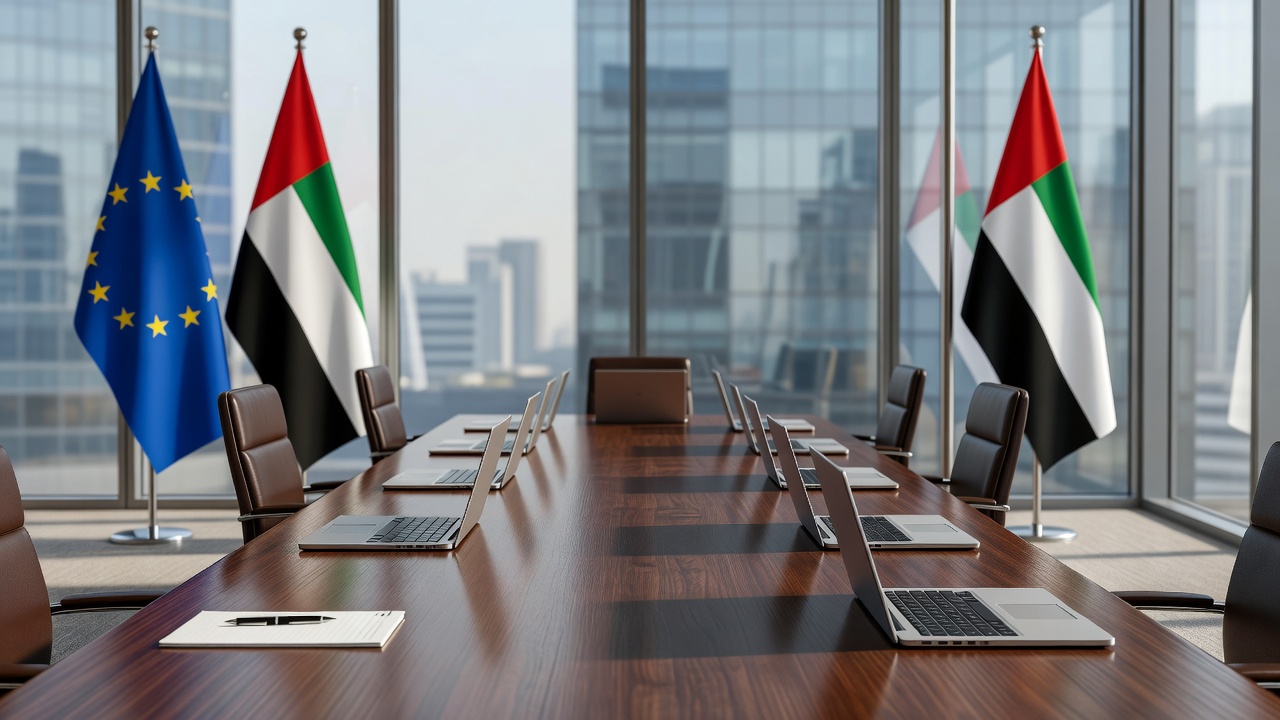

The European External Action Service reported that the Ninth EU–UAE Structural Dialogue on Anti-Money Laundering and Countering Financing of Terrorism wrapped up after virtual talks that reviewed ongoing bilateral cooperation and addressed emerging risks in combating financial crime. Co-chaired by Omran Sharaf, the UAE Assistant Foreign Minister for Advanced Science and Technology Affairs, and Rosamaria Gili, Deputy Managing Director for the Middle East and North Africa at the EEAS, the session included representatives from UAE ministries, the Financial Intelligence Unit and the EU’s Europol along with several directorates-general. Both parties discussed judicial cooperation in criminal matters, law enforcement collaboration and the exchange of financial intelligence while exploring ways to strengthen partnerships that safeguard the integrity of the international financial system.
According to the EEAS announcement, participants conducted a comprehensive review of global trends and challenges related to money laundering and terrorism financing with an emphasis on coordination to tackle illicit activities. The dialogue produced agreement on a set of technical and tangible deliverables aimed at improving communication and effectiveness between relevant authorities in the UAE and the EU. Omran Sharaf reaffirmed the longstanding partnership during the talks and stressed that regular technical exchanges help support international standards and promote stability in the global financial system.
Sharaf said in the statement, “The ninth edition of the EU-UAE Structural Dialogue on AML/CFT reflects our shared commitment to strengthening cooperation against financial crime and safeguarding the integrity of the global financial system.” He added that reaching the ninth edition demonstrates the trust, sustained engagement and shared resolve of both sides to advance these efforts. The EU side highlighted that in the current geopolitical environment support for the international rules-based order remains vital with the UAE serving as a key security partner in anti-money laundering and countering the financing of terrorism.
The EEAS noted that the dialogue serves to identify mutual priorities and address potential obstacles before they escalate while flagging the need to tackle sanctions circumvention particularly in the Middle East context. Both parties underlined that improving judicial and law enforcement cooperation is central to progress and expressed confidence that UAE advancements will be evident in its upcoming FATF evaluation due in February 2027. A WAM report from July 2025 documented the UAE’s prior removal from the EU list of high-risk third countries which officials have cited as evidence of sustained improvements in the country’s AML/CFT framework.
Senior UAE attendees included Mohamed Al Sahlawi, the ambassador to the EU, Judge Abdulrahman Murad Al Blooshi from the Ministry of Justice and Brigadier General Abdulaziz Abdullah Al Ahmed from the Ministry of Interior along with officials from the National AML/CFT Committee and other bodies. On the EU side participants came from the Directorate-General for Financial Stability Financial Services and Capital Markets Union, the Directorate-General for Justice and Consumers and the Directorate-General for Migration and Home Affairs in addition to the EU Delegation to the UAE. The EEAS indicated that the virtual format allowed for focused discussions on enhancing mutual effectiveness against financial crime without disrupting ongoing collaborative projects.
Earlier editions of the structural dialogue have contributed to measurable progress in information sharing and regulatory alignment according to periodic updates from the European Commission on EU-third country partnerships. The latest round builds on the UAE’s establishment of dedicated bodies such as the Executive Office for Control and Non-Proliferation which have coordinated national efforts since the initial dialogues began years ago. Officials from both sides plan to maintain momentum through continued engagement that aligns with broader international standards set by bodies like the Financial Action Task Force.