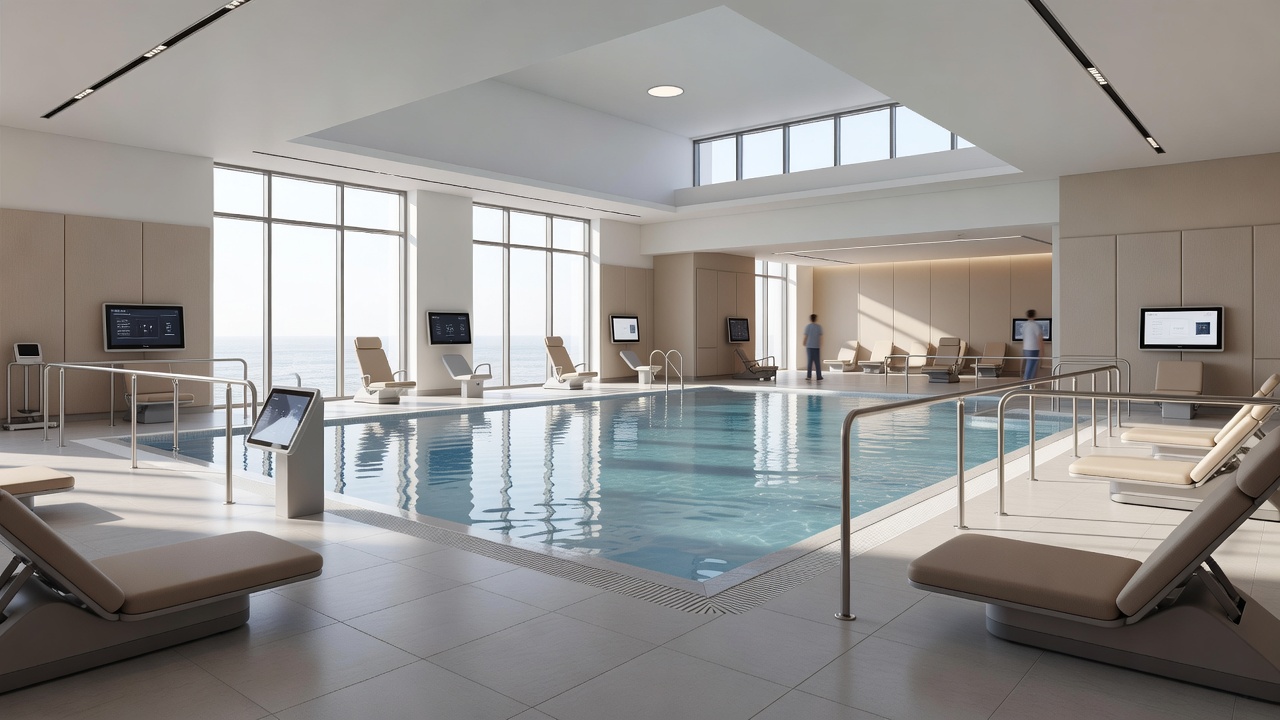

SEHA announced through the Emirates News Agency that Salma Rehabilitation Hospital has placed assistive technologies at the centre of its multidisciplinary rehabilitation programmes for patients requiring long-term care. The facility, named after the first Emirati nurse Salma Al Sharhan, employs specialised seating, multi-sensory rooms equipped with touch-screen panels and sensory boards, as well as a dedicated hydrotherapy pool designed for water-based therapy. According to hospital officials, these tools form part of personalised plans that address physical, cognitive and communication needs for individuals with disabilities or chronic illnesses who cannot be cared for at home. The hospital operates two sites with a combined capacity exceeding 80 beds and holds Joint Commission International accreditation while preparing for Commission on Accreditation of Rehabilitation Facilities recognition.
WAM reported that the technologies support a range of services from wheelchair and seating evaluations to sensory integration therapy and speech-language interventions. Physiotherapy sessions utilise the pool for improved mobility while occupational therapy focuses on daily living skills through structured tasks in controlled environments. SEHA data places the emphasis on gradual progress for mechanically ventilated patients and those recovering from traumatic injuries, with programmes tailored to both adult and paediatric cases. The approach combines medical oversight from experienced physicians with therapy delivered by specialists in a setting designed to resemble a home environment.
A SEHA assessment found that early introduction of assistive devices such as speaking valves and specialised positioning equipment has enabled patients to transition from full dependency to greater self-sufficiency within weeks. One documented case involved a child who progressed from immobility to walking with minimal support after two weeks of targeted seating and activation protocols following a severe brain injury. Similar outcomes have been recorded for stroke patients who regained communication and swallowing functions through coordinated speech therapy supported by videofluoroscopic studies. These results align with the hospital’s focus on restoring functional abilities while reducing reliance on invasive support systems.
World Health Organization figures show that 2.5 billion people globally require at least one assistive product to live independently, with that number projected to reach 3.5 billion by 2050. In the UAE, the rehabilitation market is forecast to expand from USD 7.2 billion in 2025 to USD 12.8 billion by 2031 at a compound annual growth rate of 9.7 percent, according to Mobility Foresights analysis. The mobility aid medical devices segment, which includes many of the assistive tools used at Salma, is expected to grow from USD 94.11 million in 2025 to USD 136.39 million by 2031 at 6.38 percent annually, TechSci Research data indicates. Abu Dhabi leads this expansion through government investment in healthcare infrastructure and policies supporting people of determination.
Salma Rehabilitation Hospital’s programmes also incorporate psychological support and family education alongside the technological interventions, according to facility specialists. Therapists have noted that play-based approaches in sensory environments help paediatric patients achieve developmental milestones while adult programmes emphasise community reintegration through regained motor and communication skills. The hospital’s location on Salama bint Butti Street in Abu Dhabi serves as a regional hub for complex chronic care cases transferred from other SEHA facilities. Ongoing training for its international team of physicians, nurses and therapists ensures consistent application of the latest evidence-based protocols.
PureHealth subsidiary SEHA operates Salma as the UAE’s only holistic premium rehabilitation centre dedicated to long-term assisted living and recovery, hospital statements confirm. The integration of assistive technology complements traditional therapies to address the rising demand linked to an ageing population and increasing incidence of neurological conditions. Future expansions are expected to incorporate additional robotic and virtual reality systems as the national focus on inclusive healthcare infrastructure continues. Hospital records indicate that coordinated use of these tools has contributed to measurable improvements in patient quality-of-life metrics across multiple departments.