


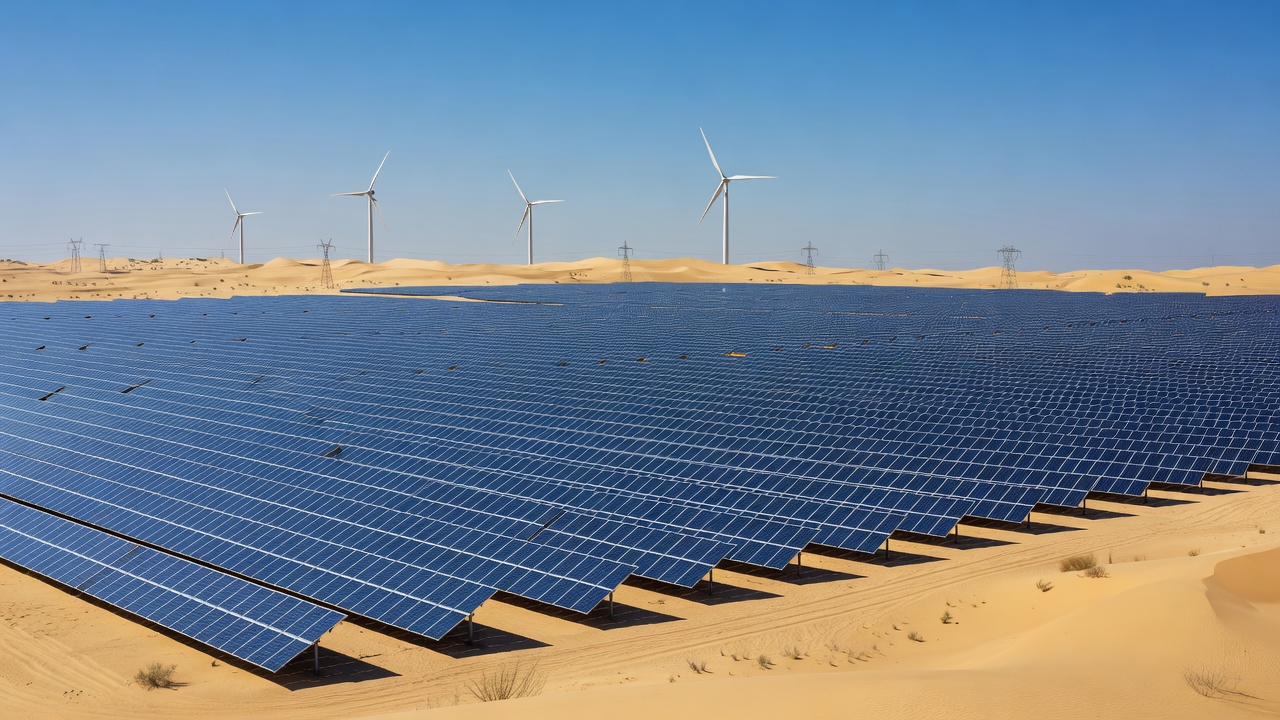

The Emirates News Agency reported that Sharif Al Olama, undersecretary for energy and petroleum affairs at the Ministry of Energy and Infrastructure, outlined substantial gains in the UAE energy sector during an industry gathering that opened Tuesday. Renewable energy capacity climbed from 129 megawatts in 2015 to more than 8.2 gigawatts last year, according to figures Al Olama provided. Clean energy, encompassing nuclear, solar, wind and waste-to-energy sources, accounted for 32.4 percent of electricity generation in 2025 and the ministry is now targeting 35 percent by 2031. Al Olama stated that the advances reflect a clear national vision for a secure and sustainable system achieved through cooperation among federal and local entities, national companies and the private sector.
Installed clean energy capacity reached 13,805 megawatts while electricity generated from those sources exceeded 62.4 gigawatt-hours last year, the undersecretary told the Emirates News Agency. Total electricity generation stood at 192,735 gigawatt-hours against consumption of 174,524 gigawatt-hours, ministry data shows. The UAE Energy Strategy 2050, updated in 2023, calls for tripling the renewable share and investing between 150 billion and 200 billion dirhams by 2030 to meet growing demand, a government planning document states. Officials have aligned the plan with the national net-zero goal for 2050.
According to the Ministry of Energy and Infrastructure, the balanced strategy combines accelerated renewable deployment with grid modernization and efficiency improvements across multiple sectors. A World Economic Forum analysis of UAE practices found that the Demand Side Management Programme focuses on buildings, industry, agriculture and transport to reduce consumption while supporting economic growth. Al Olama noted that smarter energy use, backed by national policies on conservation, forms an essential complement to clean production. The approach also incorporates artificial intelligence for predictive maintenance and real-time balancing of supply and demand.
The Emirates News Agency reported that the ministry has launched the Emirates Monitoring Centre as the first national facility to provide real-time oversight of the integrated power network by connecting all four electricity utilities. A collaborative study with Siemens produced a renewable energy management programme that enhances grid monitoring and coordination, Al Olama added. These digital tools strengthen system readiness and help minimize losses in transmission. Such measures have contributed to the UAE maintaining one of the lowest grid emission factors regionally.
Ministry of Energy and Infrastructure assessments place the clean energy expansion within a broader effort that includes the Barakah nuclear plant and large solar developments. The updated targets respond to falling technology costs and advances in storage that allow solar to compete on reliability with traditional baseload sources, a senior official told the Emirates News Agency. Investments are projected to generate 50,000 green jobs by 2030 while delivering financial savings of 100 billion dirhams. The strategy further seeks to cut emissions from the water and energy sectors to support climate commitments.
A review by the World Energy Council highlighted the UAE’s pragmatic portfolio that retains natural gas for flexibility alongside renewables and nuclear capacity. Al Olama pointed to strengthened interconnections and microgrids as elements that ensure resiliency, with the country experiencing no power disruptions during recent regional tensions. The ministry continues to monitor developments to refine targets further in response to technological progress. These steps position the UAE to meet rising demand while advancing its sustainability objectives.