



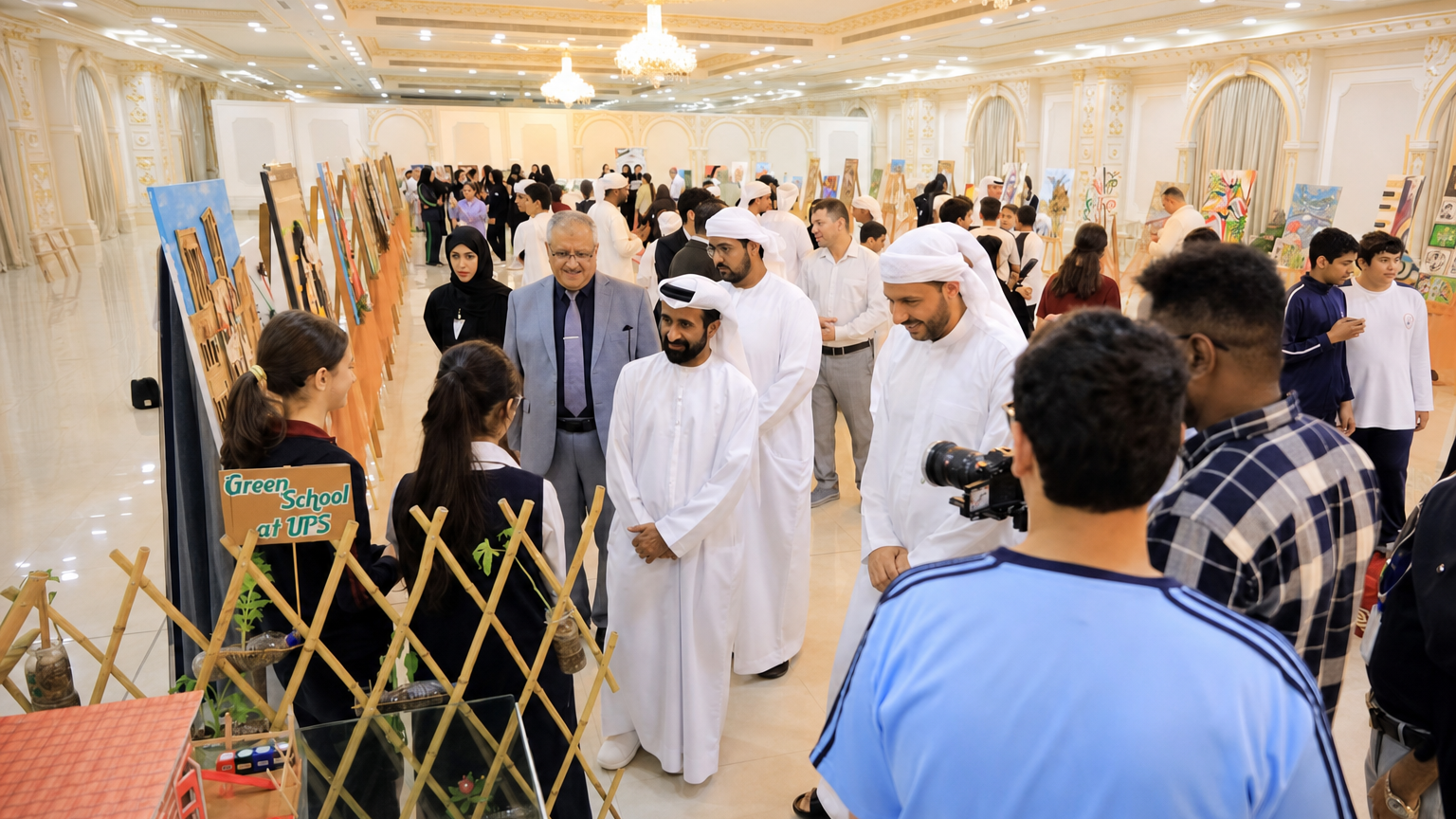

The Salem Bin Ham Cultural Centre organised a recycling exhibition with 44 schools according to the Emirates News Agency which reported that the event took place in Al Ain with attendance by Sheikh Muslim bin Ham Al Amiri as chairman of the centre’s board and Sheikh Salem bin Muslim bin Ham. School directors teachers and parents viewed student displays that transformed waste materials into useful items. The initiative sought to link theoretical knowledge with practical application while developing creative thinking skills among younger generations. Organisers highlighted how such exhibitions encourage students to devise solutions that reduce waste and conserve resources effectively.
Students from the participating schools presented a range of creative projects that demonstrated their ability to repurpose consumed materials into valuable products the WAM report detailed. These works reflected strong engagement with sustainability concepts and illustrated the potential for innovation in everyday environmental challenges. Attendees including families interacted with the young exhibitors who explained their ideas and the processes behind each creation. The exhibition provided a platform for direct dialogue about practical steps toward better resource management.
Sheikh Muslim bin Ham praised the UAE leadership’s support for initiatives that foster innovation and sustainability among youth a statement carried by the national news agency. He described the exhibition as an important platform for showcasing student creativity and embedding environmental consciousness. The chairman emphasised how such events align with national priorities to develop capable future generations. His remarks underscored the role of cultural centres in advancing community-wide education on ecological responsibility.
The event forms part of wider UAE efforts to integrate sustainability into education with the Abu Dhabi Sustainable Schools Initiative reporting that participating institutions recycled more than 336,000 kilogrammes of waste during the 2025-2026 cycle. That programme also recorded over one million litres of water recycled by schools a fourfold increase from the prior year. Student involvement in eco clubs grew by 54 percent to 11,544 members who completed 1,308 environmental projects. These figures illustrate the scale of youth-driven action across the emirate.
Separate data from the Emirates Environmental Group shows its 2025 recycling programmes reduced carbon dioxide emissions by 6,007 metric tonnes while conserving substantial energy and landfill space. The group collected more than 1.31 million kilograms of paper alongside significant volumes of plastic glass and electronic waste. Awards presented by the organisation recognised schools for outstanding performance in various recycling categories. Such benchmarks provide context for the impact of localised exhibitions like the one in Al Ain.
Similar drives have expanded across the country including a Sharaf DG e-waste collection that gathered 10,000 kilogrammes from 43 schools in 2025 according to company figures released this year. Dubai Municipality has recycled two million plastic bottles into school bags as part of its Bottle2Bag project which promotes circular economy principles. These complementary activities reinforce the message delivered at the Salem Bin Ham Cultural Centre event. Officials continue to track participation rates to measure long-term behavioural changes among students and families.