



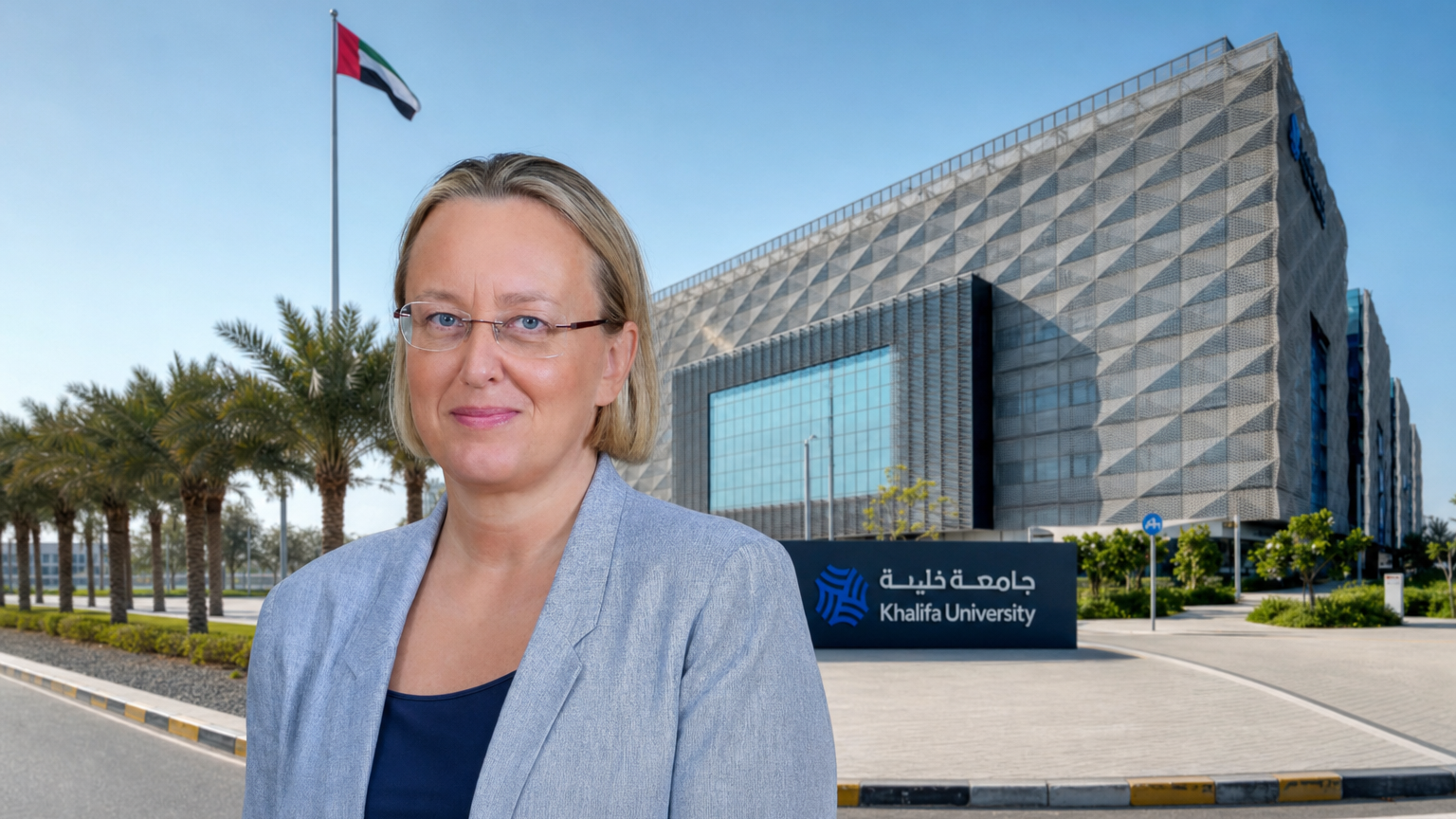

Khalifa University of Science and Technology announced that Dr. Elena Fantino, an associate professor of aerospace engineering, has been elected a full member of Section 2 Engineering Sciences in the International Academy of Astronautics and awarded the lifetime title of Academician. The distinction follows her selection as a corresponding member in 2024, which marked the first time the UAE appeared among the countries represented in the academy. The university noted that the election reflects its contributions to national goals in space science while opening new avenues for international scientific collaboration in astronautics.
Dr. Fantino’s progression within the academy came after a rigorous multi-month review process that culminated in formal confirmation by IAA President John Schumacher and Secretary-General Jean-Michel Contant. An IAA assessment found that the organization now counts more than 1,200 members and corresponding members drawn from 89 nationalities, with recent elections expanding participation from emerging space nations. Her elevation aligns with the academy’s ongoing efforts to diversify its ranks across disciplines and geographic regions, as detailed in its annual reports.
At Khalifa University, Dr. Fantino established the Astrodynamics research group, where her team focuses on spacecraft trajectory design, low-energy Earth-Moon transfers and multi-body dynamics applicable to lunar exploration. The university highlighted how her work on mission concepts for planetary exploration directly supports the UAE’s broader ambitions in space science. She also maintains affiliations with the Astrodynamics Technical Committee of the International Astronautical Federation and the Space Dynamics Group at the Technical University of Madrid.
A university statement underscored that the recognition advances knowledge and expertise relevant to the UAE’s ambitions in space science and exploration. Dr. Fantino previously said, “I am deeply honored to have been elected as a Corresponding Member of the International Academy of Astronautics. This recognition not only highlights the world-class aerospace research being conducted at Khalifa University, but it marks an important milestone for the UAE and the region’s growing presence in the global space sector.” Her latest election provides further opportunities to link UAE research with the IAA’s international activities.
The International Academy of Astronautics, founded in 1960 and granted UN consultative status in 1996, brings together leading experts to guide the peaceful uses of outer space. Khalifa University’s aerospace engineering department has pursued multiple projects in nanosatellite development, orbit propagation tools and analysis of space threats such as debris collisions. These initiatives form part of the institution’s wider role in bolstering the UAE’s space sector, which has grown significantly over the past decade.
IAA figures from 2025 show a continued rise in nominations from Asia, Latin America and other regions, helping the academy surpass 1,240 total members and corresponding members while maintaining an average member age of 67. The academy publishes the journal Acta Astronautica and organizes dozens of symposia each year on topics ranging from space technology to policy and law. Official space sector data show that the number of UAE universities offering specialised space programmes doubled between 2015 and 2025, supporting institutions such as Khalifa University.